TSMC Posts Record Third-Quarter Profit: 2nm, AI Demand and Why the Market Didn't Cheer

TSMC made NT$763.1 billion between July and September, up 68.7 percent from a year earlier and its sixth straight record quarter, with AI driving 68 percent of sales. On the same day, chip stocks were falling in Asia. Here is what the numbers say.
What TSMC Reported on October 15
The Taiwanese company published its third-quarter 2026 results on Thursday, October 15, for a quarter that closed on September 30. It was its best set of accounts to date and beat market expectations on both revenue and net income.
Profit, Revenue and Margins in One Table
| Metric | Third quarter of 2026 | Reference |
|---|---|---|
| Net income | NT$763.1 billion (about US$23.6 billion) | Up 68.7 percent year over year; sixth record in a row |
| Revenue | NT$1.49 trillion (about US$46.36 billion) | Above the top end of its own guidance |
| Gross margin | 66.4 percent | Within guidance (65 to 67 percent) and 1.3 points below the previous quarter |
| Operating margin | 58.7 percent | Above the top end of its guidance |
| Free cash flow | NT$476.56 billion | Versus NT$139.38 billion a year earlier |
Six Record Quarters in a Row: What It Means (and What It Doesn't)
Six consecutive profit highs say something specific: demand for advanced chips has outrun production capacity for two years. They say nothing about the next ten years and do not guarantee the share price will rise.
The Fourth-Quarter Guidance
For the current quarter, TSMC projects revenue between US$52.3 billion and US$54.3 billion, a 14 percent increase over the previous quarter and a 58 percent jump from a year earlier at the midpoint.
Read also

Where the Money Comes From: AI and Advanced Nodes
What HPC Is and Why It Is 68 Percent of Sales
HPC stands for high-performance computing: chips for data centers, servers and AI accelerators. It contributed 68 percent of revenue, against 21 percent from smartphones. Technologies at 7 nanometers and below made up 79 percent of wafer revenue, and the 3-nanometer node was the largest single one at 33 percent.
The 2nm Node Is Already in Production
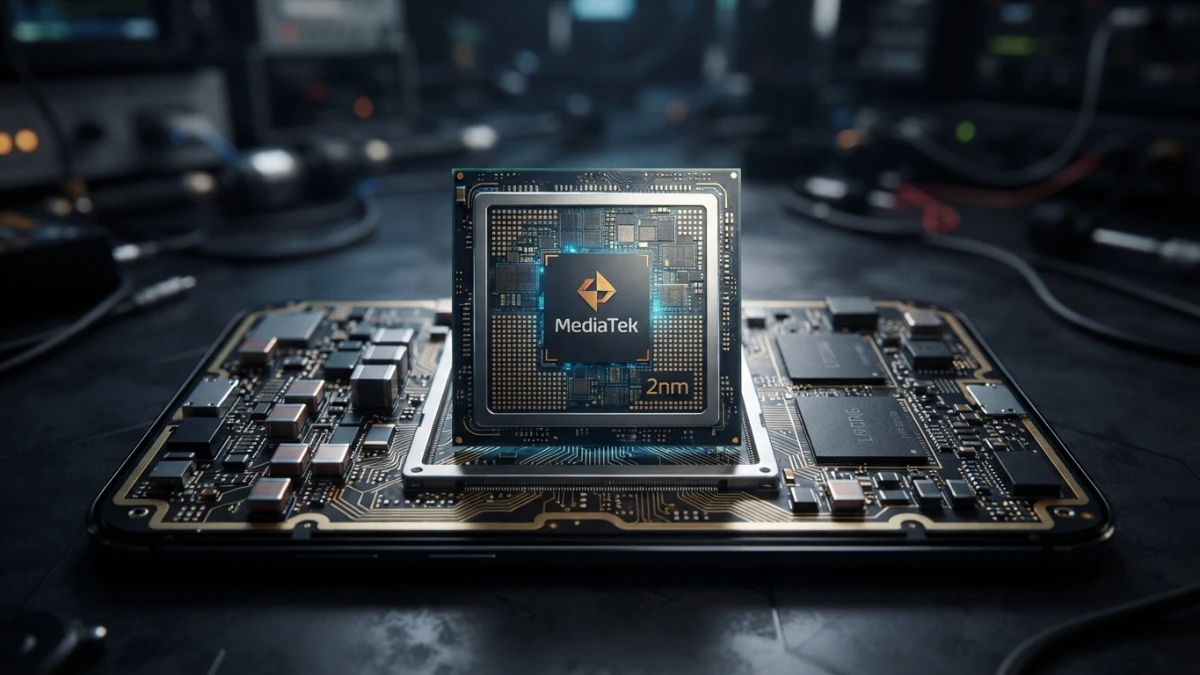
The 2-nanometer process is already earning money: it contributed 8 percent of wafer revenue, up from 3 percent in the previous quarter. In consumer products it shows up in phones running the MediaTek Dimensity 9600 Pro.
Why TSMC Wins Without Selling a Single Chip Under Its Own Name
TSMC does not design end products: it manufactures for others and does not compete with its customers. Anyone who needs the most advanced node has very few places to order it, and the company charges per wafer, not per product success.
Profit Up, Margin Down: the New-Node Paradox
Starting a Process Costs: Yield, Tuning and Volume
A new node does not start out mature. At first the yield, the share of good chips per wafer, is low and process tuning burns time and materials, so every valid wafer costs more right when volume is still small.
The Three to Four Margin Points the 2nm Ramp Takes
TSMC warned that the 2nm ramp will dilute second-half gross margin by about three to four percentage points. That is why the quarter's margin was 66.4 percent, 1.3 points below the previous one, even as profit hit a record. It is not a sales problem; it is the cost of breaking in a process.
Growing Is Not the Same as Getting More Efficient
Selling more wafers lifts profit even when the margin falls, because the pie is bigger; what falls is the share kept from every dollar billed. As 2nm matures and volume grows, the margin should recover.
The Contrast: Record Results in the Middle of a Selloff
What Happened to Chip Stocks in Asia That Week
On the same Thursday as the record, South Korea's Kospi plunged 7.57 percent to 5,554 points, with SK Hynix losing more than 11 percent and Samsung nearly 10 percent. That is a different day from the October 13 selloff, when the Kospi dropped more than 5 percent. The two sessions should not be mixed up.
Results and Share Prices Are Two Different Things
A company can beat every one of its own records and see its stock fall the same day. The share price reflects expectations about the future, not a snapshot of the quarter just gone.
Debt, Rates and the Fear of Overcapacity
The market was not punishing the accounts but the context: high interest rates and doubts about how much data-center spending is financed with debt. If that investment slowed, the fab that cannot keep up today would have too much capacity. It is a reasonable fear, and also a hypothesis.
What It Means If You Buy Compute or Work in 3D
Advanced-Node Capacity and GPU Prices
More capacity may improve chip supply in the medium term, but TSMC does not set the final price of its customers' products: memory, advanced packaging and demand all weigh in too.
Why TSMC's Capex Matters If You Train or Deploy Models
The company raised its 2026 investment plan to a range of US$60 billion to US$64 billion and said spending from 2026 to 2028 will far exceed the previous three years. That money becomes fabs and advanced-packaging capacity, the bottleneck that currently limits how many accelerators can ship.
What These Numbers Do Not Say
They do not say what you will pay for a GPU, whether AI demand will hold, or whether the stock will go up or down.
What to Watch in the Coming Quarters
Gross Margin as the 2nm Node Matures
This is the cleanest signal of whether the new node starts paying for itself.
Samsung's and SK Hynix's Own Results
They complete the picture: memory and logic move on the same demand but with different margins.
Whether the Selloff Corrects or Continues
The market will decide whether the overcapacity fear was real or just excess caution.
Conclusion
The verifiable facts: TSMC made NT$763.1 billion, up 68.7 percent, with AI contributing 68 percent of sales, 2nm already in production and margins easing on the cost of the ramp. The rest, the stock drop and the doubts about sector debt, is market reading rather than a conclusion from the numbers. We keep tracking these results on the blog.