QSSR: Sony Brings AI Upscaling to the Base PS5, No Pro Required

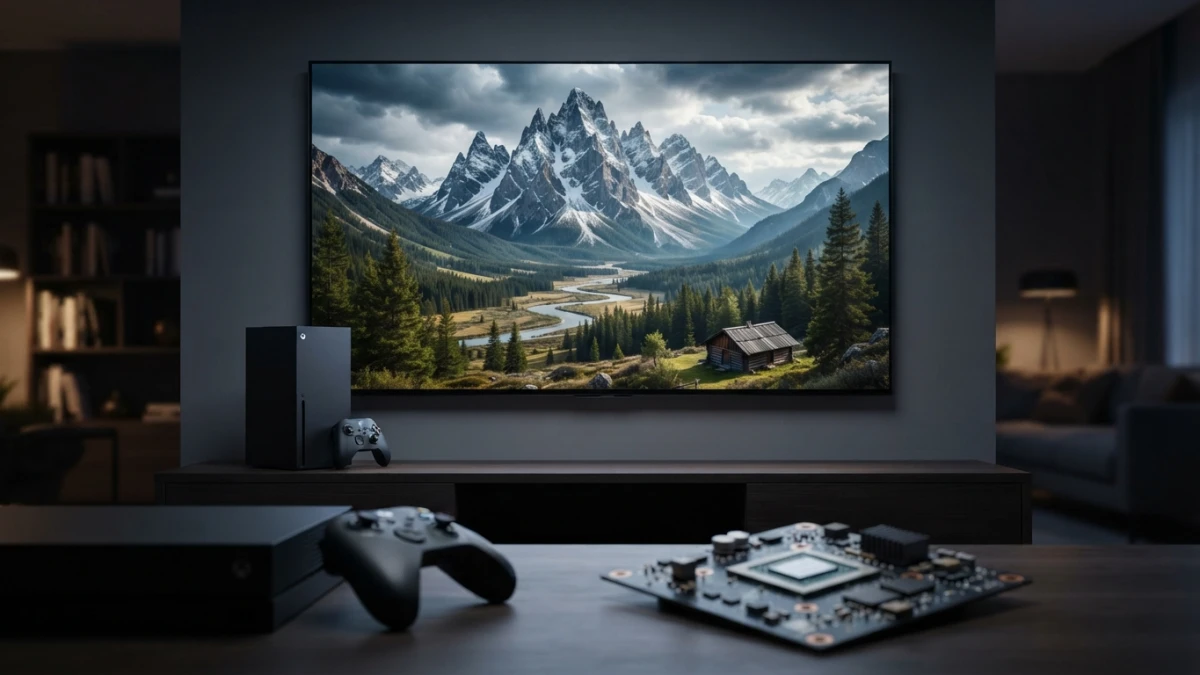
Sony has launched QSSR, its AI upscaling for the standard PS5, with Wolverine and Ghost of Yōtei as the first games and no PS5 Pro needed. The console has no AI chip: the trick is not adding hardware, it is making reconstruction cheaper.
What QSSR Is and How It Differs From PSSR
On October 1, 2026, Sony published the QSSR (Quick Spectral Super Resolution) announcement on the PlayStation Blog, signed by Daniel Craig, principal engineer in Graphics R&D at Sony Interactive Entertainment. The question hanging in the air was simple: if the PS5 Pro has an AI upscaler that looks great, why can't the regular PS5 have one? QSSR is the answer.
The October 1 Announcement on the PlayStation Blog
Sony describes QSSR as a new performance tier of its AI upscaling, not as an unrelated technology. It comes out of Project Amethyst, the AI graphics collaboration between Sony and AMD, and it arrives first on the console that was never sold as "Pro."
PSSR (PS5 Pro) vs QSSR (PS5): Related Tech, Not the Same Tech
PSSR is the AI upscaling exclusive to PS5 Pro, and Sony still calls it the gold standard on that console. QSSR is a version built for the base PS5: it shares the family and the goal, but it is neither the same implementation nor the same hardware underneath.
Read also
The Two Innovations Behind the Name
Craig points to two: a leaner neural network architecture and a hand-tuned implementation to perform on the PS5. "Quick" does not only describe how fast the image appears; it describes how cheap the computation is.
How AI Upscaling Works on a Console With No AI Chip
Render at a Lower Resolution, Rebuild With a Network
The idea in one sentence: the game does not draw every pixel at final resolution, it draws fewer, and a neural network rebuilds the image to the display resolution using information from previous frames as well. It is not detail invented blindly; it is information recovered with trained models.
FP16 and No Dedicated Accelerator
On the PS5 Pro, reconstruction leans on hardware built for the task; the base PS5 has no AI accelerator. Craig explained it to Digital Foundry: "QSSR relies primarily on FP16 math." FP16 is 16-bit floating point, faster to compute than 32-bit on GPUs and precise enough to rebuild an image.
Internal Resolution, Dynamic Scaling and Milliseconds
The cost is paid in milliseconds, not pixels. At 60 frames per second you get about 16.7 ms per frame for the whole game, and every millisecond reconstruction takes is a millisecond the effects or the frame rate do not have. That is why the lean network and FP16 are the heart of the matter.
The First Games and What the Testing Shows
Marvel's Wolverine and Ghost of Yōtei
They are the first two titles to use it, with patches on the same day, October 1. On the standard PS5 it appears as an additional in-game graphics option: it is not on by default and it is not a system setting. QSSR has also been available to every PlayStation developer since that day.
What Digital Foundry Found (and Why 1440p Is the Sweet Spot)
Digital Foundry ran image-quality comparisons in Wolverine and measurements on a dev kit. Their practical takeaway: internal resolution can drop because dynamic scaling absorbs the extra load, but output detail looks higher. They measured QSSR as slower than Insomniac's own upscaler by roughly 1.5 ms to 1.8 ms when upscaling 864p to 1440p, which amounts to about an 8-10 fps difference. That is why 1440p is where it fits best: rebuilding from there to 4K asks less than rebuilding from 1080p.
Gains Vary by Game
To be clear: this is not a uniform improvement or a magic button. Sony claims noticeable gains in detail and image stability; independent testing confirms more detail, but with results that change by title and by mode. And PSSR remains the standard on PS5 Pro: QSSR does not replace it.
What QSSR Means for Developers
Open to Every Studio
Craig described it as a drop-in replacement for titles that already support PSSR, with the caveat that tuning game settings takes a bit more time: a few days to check, for instance, streaming settings to ensure higher-quality mips are resident. In other words, if you already integrated PSSR, adding QSSR should not mean rebuilding your engine.
Choosing Between Internal Resolution, Reconstruction Cost and Frame Rate
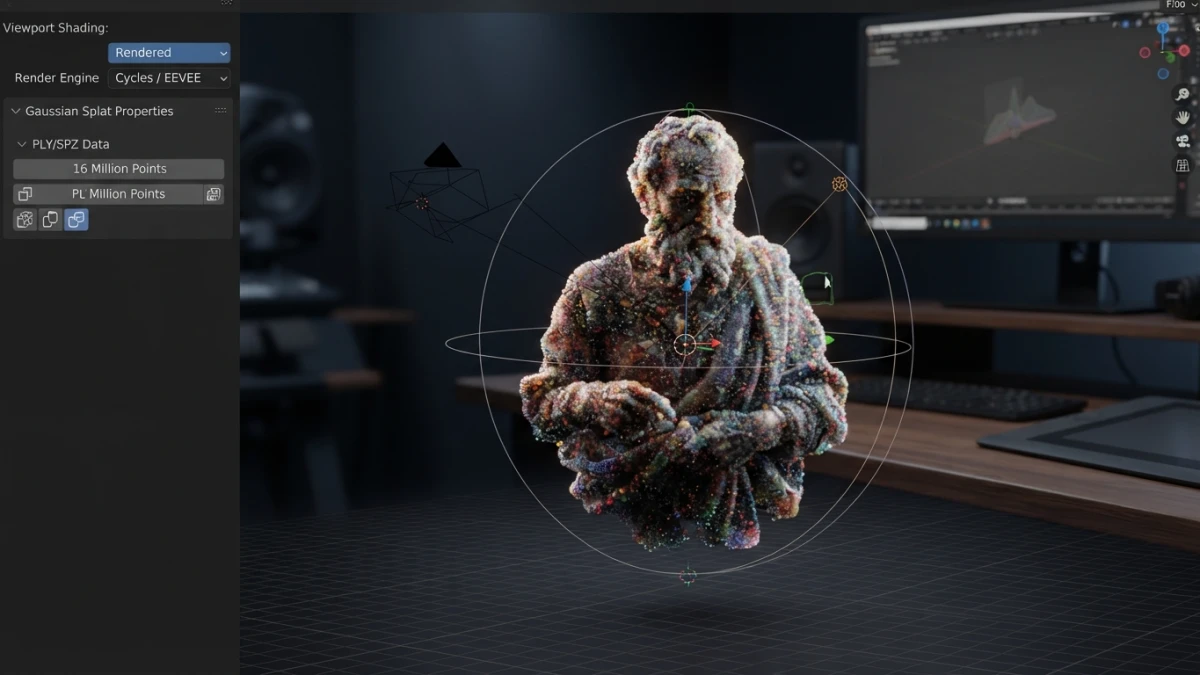
The real work is still the same balancing act: how much internal resolution you deliver, how much reconstruction costs, and how many frames you want to keep. QSSR moves that boundary; it does not remove it. If you work in real-time graphics, it is the same dilemma you see in rendering with Gaussian Splats in Blender 5.3: quality depends on the compute you can afford.
The Base Console as a Realistic Target
The base PS5 is the machine with millions of users, not the Pro. Bringing AI upscaling to that base, without asking anyone to buy anything, is the decision with the biggest impact on the installed base. And if you are also looking at buying a machine for 3D work, the guide to buying a laptop for 3D, animation and VFX follows the same principle: the balance between what you ask for and what the hardware can deliver.
The Awkward Context: Pricier Hardware and Scarce Memory
Why Memory Prices Are Also a Graphics Story
Consoles are hardware with memory inside, and this month memory is in the headlines for its prices: Micron closed its fiscal year warning that supply will be tighter in 2027 and 2028. That is not this article's topic, but keep it in mind: the memory shortage and cheap upscaling are two sides of the same problem, doing more with less. You can also see how AMD is preparing its GPU and chip price increase.
What Is Still Unknown
Only two games have it today, and there is no list or timeline for the next ones. How much other titles benefit will depend on how each studio integrates the technology and on its target resolution. There is also talk about highly anticipated games that could take advantage of it, but that is analyst expectation, not an announcement.
Conclusion
QSSR is an engineering lesson: when you cannot add hardware, you optimize. Sony brought AI upscaling to its 2020 console with a leaner network, FP16 and hand tuning, and put it in every studio's hands the same day. If you are curious about how a neural network rebuilds an image, or you simply want to know why your game looks different after a patch, this is the thread to follow on the blog.