AMD Prepares a 10% Price Hike on GPUs, AI Chips and Chipsets From Q4


AMD has told its partners its chips will cost roughly 10% more from October 2026 — Radeon GPUs, AI chips and chipsets — because of rising wafer prices at TSMC. The news has been circulating since September 17 and AMD has not confirmed the price hike.
What Is Known and What Is Not About AMD's Price Hike
A Partner Notice: Roughly 10% From the Fourth Quarter
The story came from the supply chain, not from a press release. According to reports published by Wccftech, TechPowerUp and TrendForce between September 17 and 18, 2026, AMD notified its partners — graphics card makers, assemblers and OEMs — of an increase of roughly 10% in the supply price of its chips starting in the fourth quarter of 2026, that is, from October 1. TweakTown, Notebookcheck, ThinkComputers, Softonic and XenoSpectrum picked it up afterwards. AMD has issued no statement: everything we know comes from industry sources, not from the company.
Which Products Are Affected: Radeon, AI Accelerators and Chipsets
The reported list covers three families: data center AI accelerators (Instinct), consumer Radeon GPUs and motherboard chipsets. Chipsets are the least visible part and the one that hurts most when you build a whole machine: if the chip that ties the motherboard together gets more expensive, the cost of the entire platform goes up, not just the graphics card.
The Ryzen Question: Unconfirmed, With Conflicting Reports
There is no certainty about Ryzen processors, and it is worth saying so plainly. Some reports say this round leaves them out; others warn that the pressure will arrive anyway, because AMD builds its client CPUs at TSMC and the wafer cost is paid by the same supplier on any product. Until there is confirmation, the honest answer is that it is not clear.
Read also
Why: TSMC Wafer Prices
What a Wafer Is and Why Its Price Reaches Your GPU
A wafer is the silicon disc on which hundreds of chips are manufactured at once. AMD does not own fabs for most of its products: it designs them and buys the manufacturing from TSMC. If the disc costs more, every chip cut from it costs more, and that extra cost moves down to the partner that builds the board or the card. For a sense of scale, reports put the 2 nm wafer at around $30,000, against $25,000 to $27,000 for the 3 nm one.
Advanced and Mature Nodes: 12nm, 16nm and 28nm Are Affected Too
What stands out is not that leading-edge nodes are getting pricier — they have been heading that way all year, with announced increases in the 3% to 10% band — but that the reported hike also covers mature nodes such as 12 nm, 16 nm and 28 nm. TSMC had not moved those prices in more than three years, and they are exactly the ones that produce chipsets, controllers and low-cost components. When the old node goes up, everything that used to look cheap goes up with it.
10% on the Chip Is Not 10% at Retail: Margins, Stock and Board Partners
It is worth resisting the easy math. The 10% in the report is on the price AMD charges its partners, not on the shelf price. In between sit the stock bought before the increase, each board partner's margin — which can absorb the hike, trim it or pass it on in full — and retailer promotions. The final effect depends on the product, the country and the timing: promising exact future retail prices would be guessing.

Not an Isolated Story: The Year of Expensive Components
Intel Already Raised Prices and Another Round Is Reported
Intel confirmed price increases in July 2026 on selected consumer and server processors, with some Xeon parts more than $1,000 more expensive, and a further round was reported in September. These are parallel processes to AMD's, with the same underlying cause: foundry, packaging and demand costs.
Memory: DRAM Spiked in the First Quarter of 2026
DRAM contract prices rose between 90% and 95% quarter over quarter in the first three months of the year, and PC DRAM between 105% and 110%, according to the market analyst data cited by the specialist press. It is the figure that hits budgets hardest: memory stopped being the cheap part you doubled without thinking.
GPUs Above Launch Price: The Radeon RX 9070 Case
In Europe the Radeon RX 9070 has been seen at around 694 euros when its launch price was about 593, meaning above the suggested price. At the German retailer Mindfactory, GPU sales rose close to 29.5% in August over July, with the RX 9070 XT as the best seller. The market was already tight before the October notice.
What It Means If You Are Building or Upgrading a PC
If You Need the Hardware Now: What to Look For Before October
If your work depends on the machine and you already know which model you want, buying before October avoids part of the adjustment. Before paying, check three things: that the price is this week's and not an old suggested price, that the VRAM is enough for what you actually do — rendering, large scenes, local AI models — and that the power supply and motherboard support the card without forcing you to replace half the build.
If You Can Wait and What to Do About the Second-Hand Market
If it is not urgent, the reasonable move is not to buy out of fear: it is to wait and track real prices. In the second-hand market, insist on an invoice, test the card under sustained load and rule out units that have been used for mining, because a low price does not make up for a replacement three months later.
Cloud Rendering and Renting Compute Versus Buying Hardware
For workload spikes, renting a GPU by the hour or moving renders to the cloud is usually cheaper than buying hardware that will sit idle most of the month. The simple rule: if your load is heavy but occasional, rent; if it is daily and pays your bills, buy once the hardware has a clear return.
The Impact on 3D Artists and Developers
GPU Rendering and the Cost of Upgrading the Whole Platform
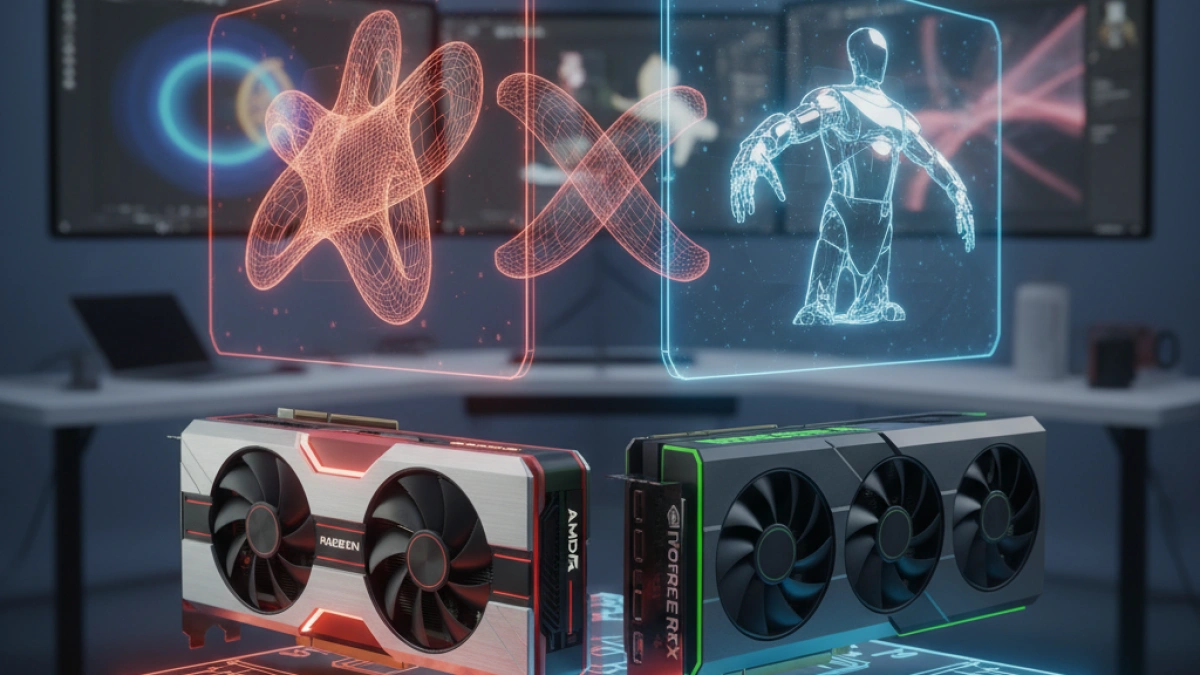
For anyone rendering in Blender, the increase hits two fronts at once: the card and the rest of the platform. Before swapping GPUs, measure where the real bottleneck is; that is what the AMD vs NVIDIA GPU comparison for 3D artists and the GPU versus CPU rendering guide are for. And for anyone running local inference, memory costs weigh as much as the card: Meta's MTIA chips explain why the whole industry is fighting over the same foundry capacity.
What to Watch in the Coming Weeks
Retail Prices, Not Announcements
The notice does not change the shelf price: the real thermometer is what stores charge. It is worth writing down today's price for three or four specific models and checking it every week to see when the movement starts.
Whether Nvidia Follows and How Long the Effect Takes
If foundry costs rise for everyone, Nvidia faces the same pressure, but until there is a notice it is only a scenario, not a fact. The other variable is time: stock bought before October reaches stores with a lag of several weeks, so the full effect may take a while to show up.
Conclusion
AMD has confirmed nothing, but the reported move is concrete: chips roughly 10% more expensive from October, driven by pricier TSMC wafers, in a year when memory, Intel and GPUs above suggested price were already pushing in the same direction. If you need the hardware to work, decide with today's price and with the VRAM you actually use; if you can wait, wait without panic and browse the second-hand market with care. We keep following components and hardware for 3D in the blog's technology news section.