Best Blender 5.2 Addons in 2026: Free and Paid, by Workflow


The best Blender 5.2 addons in 2026 survive the jump to the 5.x series: the July 14 LTS renews the extension ecosystem that started with 4.2, and not every 4.x addon still works. This guide separates the essential from the disposable, workflow by workflow.
The Addon Ecosystem in the 5.x Era
From Add-ons to Extensions: What Changed Since Blender 4.2
Since Blender 4.2 LTS, installing tools and themes goes through the Extensions Platform, which connects authors with users through the official extensions.blender.org service. Packages are no longer loose script files: they now carry an extension manifest that declares version, dependencies, and compatibility. LoopTools, for example, was part of the add-ons bundled with 4.1 and is now distributed as a standalone extension. The legacy format has not completely disappeared: Blender still supports installing from disk, but the 5.x series pushes everyone toward the new system.
Why Some 4.x Addons Break on 5.2
Major version jumps break tools for predictable reasons: Python API deprecations, removed modules, and changes in the viewport backend. An addon untouched since 4.1 can load in 5.2 and fail silently, or simply not show up in the panel. Before upgrading a project mid-production, check whether every tool in your pipeline is ready: 5.0 arrived on November 18, 2025, 5.1 on March 17, 2026, and 5.2 closes the cycle as the long-term-support release, with its new experimental physics system for hair and cloth as the headline feature.
How to Check Whether an Addon Is 5.2-Compatible
Declared Version, Changelog, and Testing on the LTS
The first clue is the version declared in the extension manifest: if the author lists support for 5.1 or 5.2, you are on the right track. Next, check the changelog of recent updates: active authors usually note when they adapted their code to the new API. The definitive test is installing the tool on a copy of the 5.2 LTS and using it on a test file before committing to production. Keep in mind that 5.2 LTS is the recommended version for stable pipelines until July 2028, so the time invested in checking compatibility pays off for two years.
Read also

Essential Free Addons
Node Wrangler: Shortcuts for Shaders, Geometry Nodes, and the Compositor
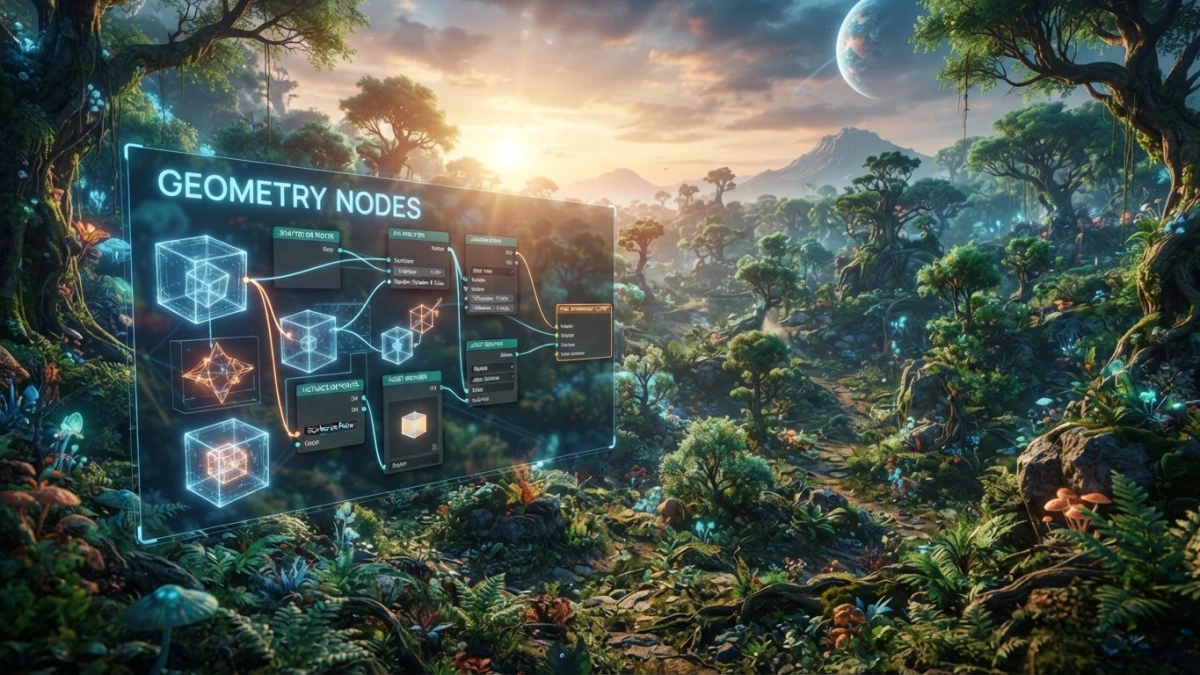
Node Wrangler is the first addon any serious Blender setup installs. It ships with the program and speeds up the node editor with shortcuts: preview a node with Ctrl Shift click, auto-connect, mix materials, or add common nodes without digging through menus. In 2026 its value extends to Geometry Nodes, where the same shortcut system accelerates work with complex graphs, a territory we already explored in our Geometry Nodes guide for beginners.
LoopTools: Clean Curves, Bridge, and Relax Operations
LoopTools bundles modeling operations that Blender does not include out of the box: bridging between edge loops, curving a selection with controlled radius, relaxing topology, and creating perfect circles and planes. These are small operations that, in a daily workflow, save minutes on a regular basis. It is still the standard answer when you need a clean bridge between two meshes.
Bool Tool, UV Toolkit, and F2: Faster Modeling and Unwrapping
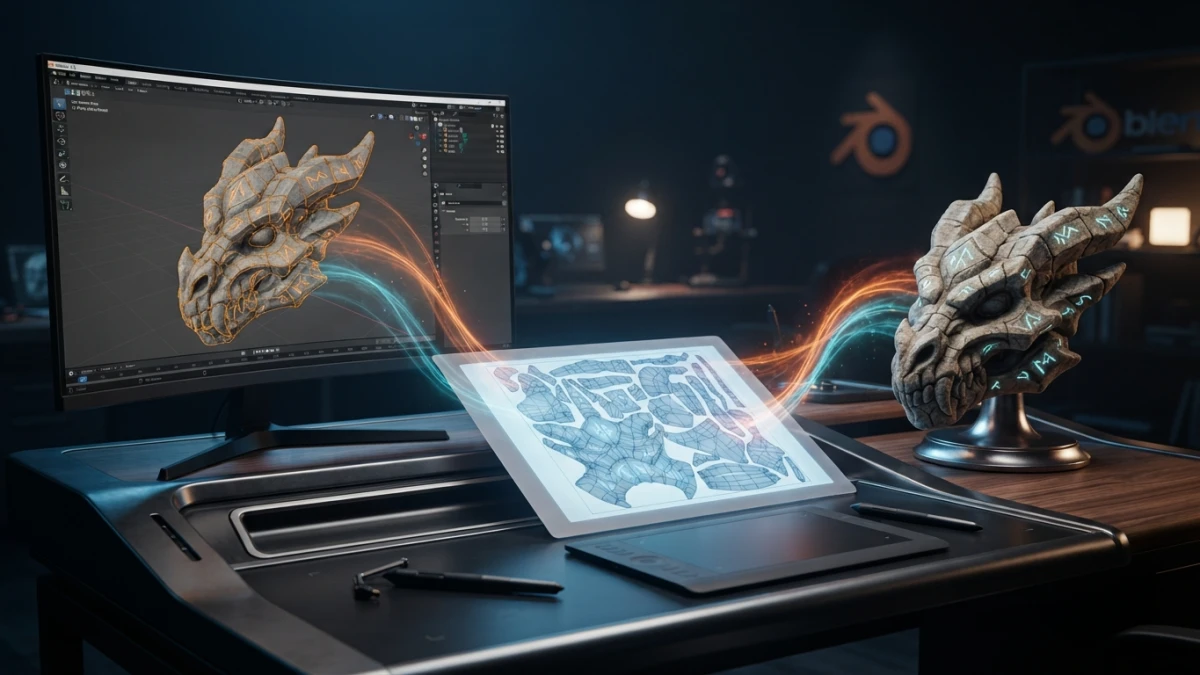
Bool Tool turns boolean operations into a single gesture: select two objects, run the operator, and the tool manages modifiers and order for you. It is the ideal companion for hard-surface workflows without jumping into paid tools. UV Toolkit, meanwhile, organizes unwrapping with packing, alignment, and island-correction functions designed to speed up UV work, the subject of our Blender 5.2 UV mapping tutorial. And F2 solves the classic hole-filling problem: with one shortcut you fill a selected edge loop with a new face, perfect for quick retopology and for closing holes in organic meshes.
Read also

BlenderKit and Poly Haven: Free Asset Libraries Built In
BlenderKit is an integrated library of free models, materials, and brushes that download on demand without leaving Blender. The Poly Haven addon does the same with the community catalog of textures, HDRIs, and models, also free and under permissive licenses. Both solve the same underlying problem: stop wasting time hunting for assets in the browser and have a quality library one click away inside the viewport.
Paid Modeling and Hard-Surface Tools
Hard Ops and Boxcutter: The Hard-Surface Duo
If hard-surface modeling is your main workflow, Hard Ops and Boxcutter form the reference duo. Boxcutter delivers direct cuts and booleans on the mesh, while Hard Ops manages the modeling pipeline: edge marking, bevels, inspection shaders, and scene organization. It is a purchase aimed at people who model mechanical parts, weapons, or industrial props regularly; for occasional use, the free Bool Tool may be enough.
Machin3tools: Everyday Modeling Utilities
Machin3tools is a paid toolbox that improves daily modeling: object reordering, clean face creation, smart transform apply, advanced bevel, and its own edge-marking system. Many modelers consider it the first paid addon worth buying because of the sheer number of micro-tasks it removes, especially in hard-surface and retopology workflows.
Rigging and Animation
Auto-Rig Pro: Rigs, Retargeting, and FBX/GLTF Export for Games
Auto-Rig Pro is a standard in the game industry: it rigs characters in a few clicks, retargets animations between rigs, and exports FBX or GLTF with presets ready for Unity, Unreal Engine, and Godot. In 2026, version 3.78.x is compatible with Blender 5.1, making it the safe choice for anyone who needs to move characters into a game engine without fighting manual rigging.
Faceit and BlenRig vs. the Free Rigify and CloudRig
Not all rigging requires paying. Rigify and CloudRig ship with Blender and generate complex rigs with advanced controls for free, though with a steeper learning curve. Paid alternatives like Faceit, specialized in facial animation, or BlenRig, with its layer-based rigging philosophy, offer more automated workflows. The choice depends on frequency: a professional animator rigging characters daily justifies the purchase; an occasional generalist can live perfectly well with Rigify.
Texturing and Asset Libraries
Poliigon: PBR Textures, Models, and HDRIs Inside Blender
The Poliigon addon lets you search and import more than 7,000 PBR textures, models, and HDRIs without leaving Blender. Its latest update, from May 2026, keeps compatibility with the 5.x series and streamlines the preparation of render-ready materials. It is the natural paid option if you already work with the Poliigon library and want it integrated into the viewport workflow.
UVPackmaster: Automatic UV Packing
UVPackmaster solves UV island packing with optimization algorithms far denser than Blender's default packer. One click reorders every island on the mesh to make the most of the texture space, which translates into higher effective texel resolution. For anyone texturing complex pieces or baking game assets, it is one of the best time-return purchases available.
Vegetation and Environments
Geo-Scatter and botaniq: Scattering for Landscapes and Vegetation
Geo-Scatter markets itself as the most powerful and popular scattering plugin for Blender professionals: it populates vegetation landscapes, cityscapes, or even asteroid fields with fine control over density, variation, and distribution. botaniq, from the polygoniq studio, is its natural companion: a vegetation library with hundreds of assets and scatter presets ready to use. If your work is environments and natural scenes, this pair replaces hours of manual assembly with a couple of clicks.
Rendering, Management, and Production Extras
Render Control and Blend Project Packer: Remote Control and Packing
Two July 2026 releases round out the production kit. Render Control lets you control and monitor renders remotely, useful for teams sharing render servers. Blend Project Packer packs the entire project with its textures and dependencies, avoiding the classic problem of the file that opens with broken materials because assets are missing.
Where to Look Next: extensions.blender.org and Superhive (formerly Blender Market)
There are two clear stops for exploring the rest of the ecosystem. extensions.blender.org is the Blender Foundation's official platform, hosting open-source extensions with community reviews. And Superhive, formerly Blender Market, remains the reference storefront for paid tools, with more than 68,000 assets and add-ons from independent creators. A healthy rule: search the official platform first and turn to Superhive when you need a specific commercial tool.
How to Install an Extension in Blender 5.2
Get Extensions, Install from Disk, and Third-Party Marketplaces
The recommended flow in 5.2 goes through Preferences, then Add-ons, and the Get Extensions button: from there you browse the extensions.blender.org catalog, pick the extension, and install it in one click. If you have a downloaded package, use the install-from-disk option and select the file with the extension manifest. What has no place in the 5.x series anymore is legacy add-ons in the old format: if a tool only exists that way and its author has not migrated it, look for an active alternative.
Conclusion
Setting up your Blender 5.2 pipeline in 2026 comes down to three decisions: start with the essential free addons, pay only for the tool that targets your main workflow, and verify 5.x compatibility before every install. With Node Wrangler, LoopTools, and a good free asset library you already cover the base; everything else is selective investment. Keep reading the blog for more Blender 5.2 guides, from procedural materials to advanced Geometry Nodes.