Nearly $1 Trillion in Two Days: Wall Street Stops Rewarding AI Spending

Two sessions wiped nearly a trillion dollars off tech stocks. It wasn't bad earnings that did it — it was the size of the bill. The AI capex selloff has three names, Alphabet, Intel and Amazon, and each one tells a different story.
What Happened in Two Days
Alphabet and Microsoft reported on Thursday, October 29. Intel and Amazon followed on Friday the 30th. By Friday's close the S&P 500 was down 1.82% at 7,580.07, the Nasdaq Composite down 2.86% at 25,437.00 and the Dow Jones down 572.25 points (-1.09%) at 51,770.31, according to AP and CNBC.
The number that matters more is the monthly one: the Nasdaq lost 5.3% in October, its worst month since March 2025, and sits roughly 8% below its recent high. Over the same period the S&P 500 fell 0.9% while the Dow gained 1.7%. Money didn't leave the market. It left technology.
Nearly a Trillion Dollars of Value Gone
The Guardian and Gizmodo settle on the same round figure: close to a trillion dollars of market capitalization erased from the tech sector in two sessions. It happened without a crisis, without a war and without a bad macro print, on nothing but three quarterly reports.
Read also
Alphabet: The Day Capex Stopped Being Good News
For two years, announcing more data center spending pushed the stock up. On Thursday it worked the other way. Alphabet fell 12.6% to $283.82 on October 29 and took a historic amount of market value with it.
Half a Trillion in Market Cap in One Session
The estimates differ depending on who does the math: Yahoo Finance calculates $475 billion lost, while CNBC and the Financial Times put it near $500 billion. Either way it is the second-biggest single-day loss for a US-listed company, behind only the $593 billion Nvidia shed in January 2025.
Google Cloud Doubled Revenue and Still Had to Be Paid For
Google Cloud grew 103% year over year. That is an extraordinary number. The catch is that a cloud is built with servers you buy before the customer pays, and in the quarter Alphabet spent $51.4 billion on property and equipment, more than double the $24 billion of a year earlier. Against $42.3 billion of operating cash flow, the math doesn't close.
Negative Free Cash Flow: -$9.07 Billion
That is the number that broke the narrative. Alphabet didn't lose money, but it spent more than it generated, and the market had spent two years assuming capex was an investment that would pay off later. Once free cash flow turns negative the question changes: it is no longer "how fast will you grow" but "who pays for this while you grow".
Search Came Up Short: $63.35 Billion Against $65 Billion Expected
The business that funds everything else grew 12%, but below expectations. That is the underlying tension: AI-generated summaries reduce the need to click an ad. Alphabet kept its 2026 capex guidance at $195-205 billion and signaled 2027 goes higher still, past $300 billion according to CNBC.
Intel: The Problem Isn't AI, It's the PC
Intel fell 29% on Friday, its worst day since 1974. Not because AI is going badly — the opposite.
$16.5 Billion in the Quarter and a Number Most People Skipped
Revenue rose 21% year over year to $16.5 billion. Data Center and AI (DCAI) grew 78% to $7.32 billion, ahead of the $6.67 billion consensus. The collapse came from the other side: Client Computing, the PC processor business, fell 5% to $8.1 billion. That is half the company, and it is shrinking.
Guidance of $15-16 Billion for the Fourth Quarter
Guidance for the current quarter landed well below the roughly $17 billion the market expected. The company's own explanation is concrete: memory shortages are making machines more expensive, and the PC slowdown will continue at least through the first half of next year.
Memory Shortages and PC Shipments Falling 12% in 2026
The chain is easy to follow: AI data centers soak up global memory output, memory gets more expensive, building a PC costs more, and buyers postpone. Intel expects PC shipments to fall about 12% this year and another 10% in 2027, according to Yahoo Finance. On top of that, an accident at its Israel fab will cost around $300 million in fourth-quarter revenue.
Amazon: Growing Cloud 39% and Falling Anyway
If anyone wanted a counterexample proving the problem is spending and not the business, here it is.
$201.9 Billion in Revenue and Soft Guidance
Net sales rose 12% to $201.9 billion and AWS grew 39.3% to $46 billion, its fastest pace in nearly five years, at a $184 billion annualized run rate. The stock still fell: fourth-quarter guidance of $240-247 billion came in below what the market expected.
$220 Billion in Capex Held
Amazon kept its plan to invest about $220 billion in fixed assets during 2026 and gave no sign of trimming it. Andy Jassy defended the spending: capacity gets built before demand arrives, and if you don't build it the customer goes elsewhere. It is a reasonable argument that the market no longer accepts for free.
Why the Market Changed Its Mind
Capex Reads as a Bill Now, Not an Investment
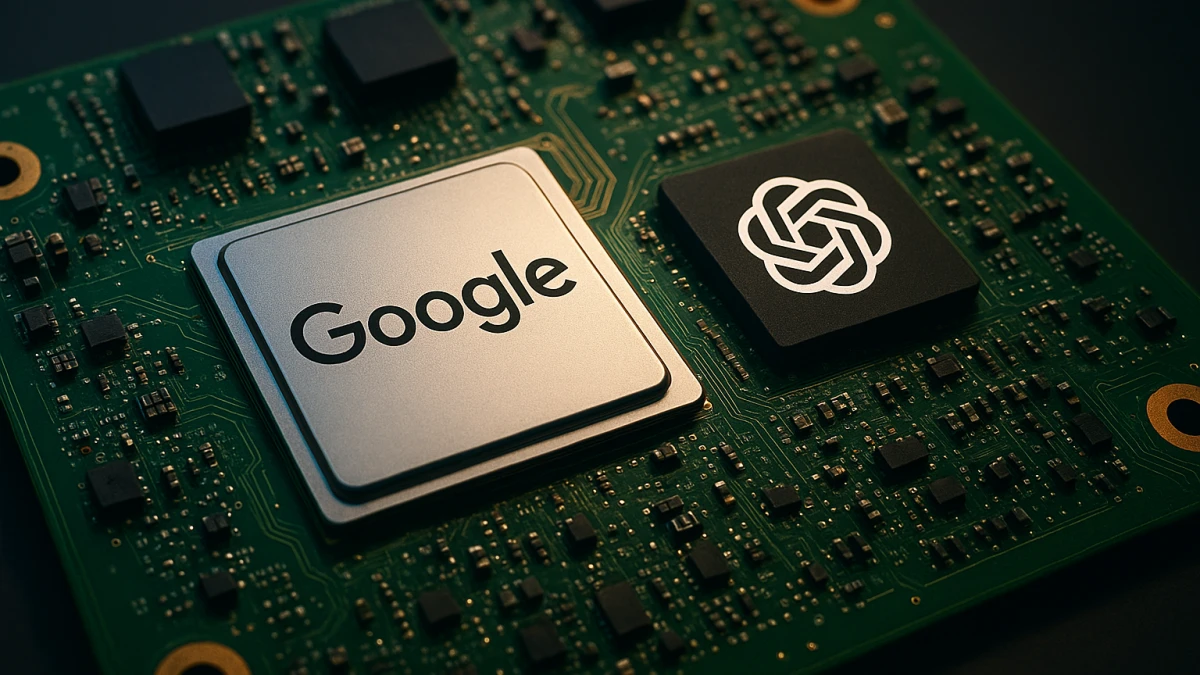
All three companies said the same thing they have said for two years: we are going to spend more. What changed is the context. The silicon race got more expensive — Nvidia, TPUs, capacity contracts — and the market now wants visible returns inside the same quarter. As the move by OpenAI buying Google TPUs shows, cost per token depends on who buys the hardware and at what price.
Electricity: Who Pays for the Generation a Data Center Eats
The second front is power. In October, US federal regulators rejected most of PJM's proposal to require large new consumers to bring their own generation capacity, according to Al Jazeera. Translated: the electricity bill for data centers threatens to get spread across every ratepayer, and that is a political problem, not a technical one.
Contagion: Semis, China and the Rest of the Chain
The move didn't stay inside three stocks. Chipmakers fell in sympathy, and in China the STAR50, the index of the country's AI and chip champions, is more than 40% below its June peak, according to CNN. Meanwhile defensive sectors such as consumer staples and healthcare rose: a classic late-cycle rotation.
What This Means If You Write Code
Token Prices and Capacity: This Money Pays for the Infrastructure
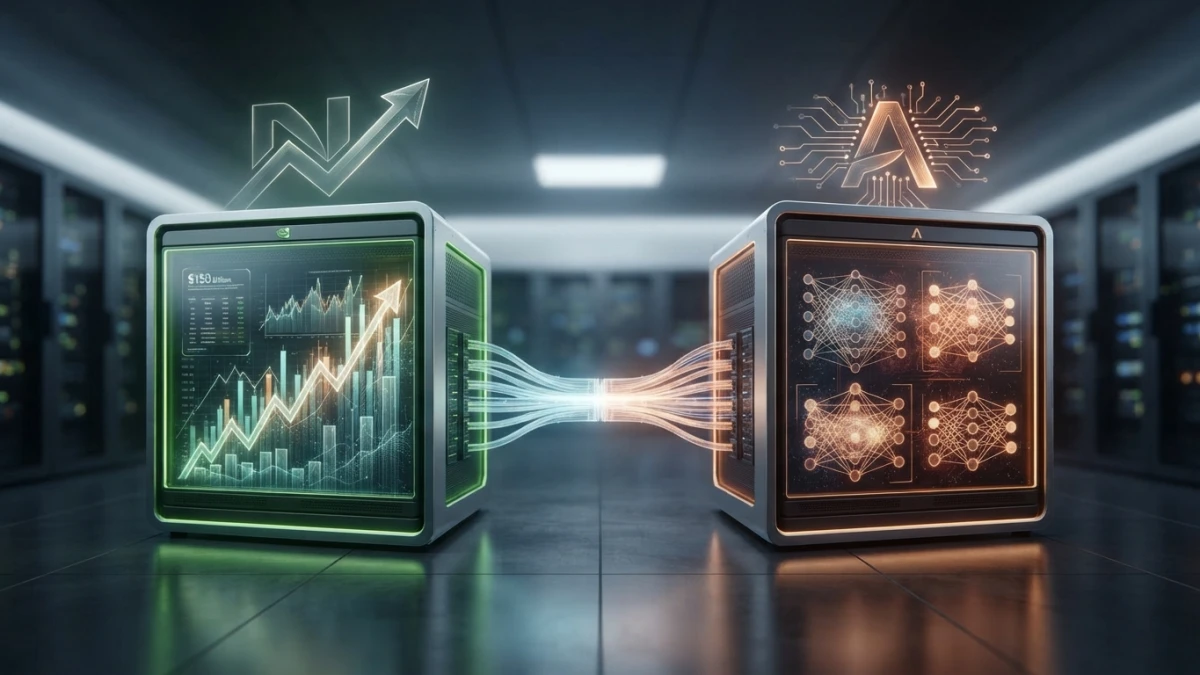
The capex that funds inference is paid for with capital that now costs more. The practical consequence isn't instant or dramatic, but it is real: firmer per-token prices, tighter usage limits and capacity queues at peak hours. The scale these companies operate at explains why: Nvidia disclosed $180 billion contracted with Anthropic and Anthropic signed $11.6 billion with Akamai. None of that is free.
Hardware: Scarce Memory, Pricier PCs
If you have to refresh hardware this year, the memory shortage is already in the price. Laptops and desktops cost more and lead times stretch. For anyone rendering or compiling, that means budgets you had considered closed.
Cloud Contracts and Commitments: What to Review Now
If your company signed multi-year spend commitments to get a discount, now is the time to look at the capacity clause and the minimums. Providers are building on credit, which makes them less flexible with customers who don't consume what they promised.
What to Watch in the Coming Weeks
Three things: whether 2027 capex holds up in the next round of earnings calls, where memory prices go, and whether API pricing moves. If prices rise or usage restrictions appear, the chain that starts in a data center reached your invoice. Model launches, meanwhile, keep their own schedule: Gemini 4 Carbon shipped the same day Alphabet lost half a trillion in the market.
Conclusion
The correction doesn't mean AI is over. It means the boring part starts — the one where every dollar has to be justified — and that part sets what an API call costs you. All three companies are spending more than ever, and for the first time the market asked for the receipt. That doesn't pop a bubble: it changes who funds the infrastructure and at what margin. This blog keeps following the same chain, from silicon to price per token.