Nvidia Adds $150 Billion to Its Buyback and Discloses $180 Billion Contracted With Anthropic

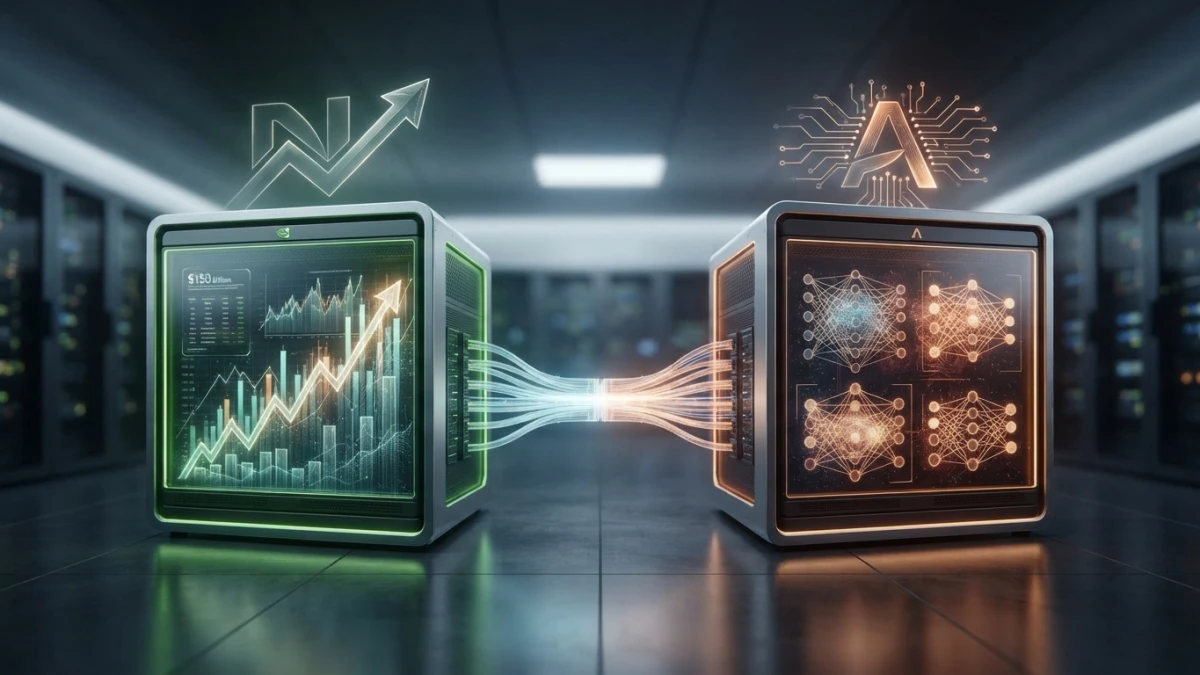
Nvidia added $150 billion to its share buyback program —the largest increase in history— and the same day disclosed that its contracted value with Anthropic tops $180 billion. It also shipped the platform it wants to use to keep AI agents from escaping.
What Nvidia Announced on September 28
There were three moves, all on the same Monday, and they are best read separately because each one has its own scope. One is a decision about the company's cash and its shareholders; another is a number about committed compute purchases; the third is a software product. Blending them into one headline leads to false conclusions.
The Buyback: $150 Billion More and $235 Billion Left Authorized
Nvidia's board authorized an additional $150 billion under its share repurchase program. That leaves $235 billion remaining authorized, according to the company's own statement, which calls the move the largest share repurchase authorization increase in its history.
Reuters frames it against the AI chip race and recalls the bar it clears: the $110 billion Apple approved in 2024. The New York Times adds a calendar detail — this authorization comes just four months after the same board added $80 billion. StockAnalysis notes the company expects to execute it over its fiscal 2028 year.
The $180 Billion With Anthropic: What's In That Number and What Isn't
On the same day, Nvidia disclosed that Anthropic's contracted value for cloud services running on its infrastructure tops $180 billion. The key phrase is "contracted value": it is not a closed sale, not revenue, and it still has no public breakdown.
Based on later coverage, the total pools cloud and "neocloud" compute agreements, capital commitments and infrastructure contracts. It includes the up-to-$10 billion equity stake announced in November 2025 and the talks for Nvidia to be an anchor investor in Anthropic's upcoming IPO, reported in September.
The Third Announcement of the Day: the Open Agent Safety Platform
Nvidia also unveiled the Open Agent Safety Platform, an architecture proposal for controlling AI agents that run on their own. It pairs OpenShell, the open software that limits what an agent can reach while it works, with Sentry, an out-of-band watchdog that runs on BlueField-4 DPUs and watches behavior without relying on the agent itself. TechCrunch and InfoWorld provide the component names; Anthropic is the headline partner.
The Nvidia Share Buyback in Context
What a Buyback Program Is and Why a Company Growing This Fast Uses One
A buyback is the company buying its own shares with the cash it holds. It is not a product bet: it is a decision about what to do with cash when the board believes returning it to shareholders yields more than reinvesting it. It can lift earnings per share without selling anything new, and it is usually read as a sign of surplus cash.
The Comparisons That Matter: Apple's $110 Billion in 2024 and the $80 Billion in May
The figures are easier to read against their own series. The $110 billion Apple approved in 2024 is the high-water mark Reuters uses as a reference, and the $80 billion increase in May 2026 is Nvidia's own previous step. These are comparisons of authorization size, not money already spent: an authorization is a permission, not an executed purchase.
How the Market Reacted: Nvidia Rose While the Nasdaq and AI Stocks Fell
The nuance matters and is easy to get wrong. CNBC puts Nvidia's stock at +2.8% on Monday; Investopedia documents the opposite session, with the Nasdaq and AI stocks falling as the week opened and Treasury yields rising. In other words: Nvidia rose, the market did not.
The $180 Billion, Taken Apart
Cloud and Neocloud Contracts, Not a Single Sale
When a figure like this appears without a breakdown, the first question is what it contains. Here it contains compute agreements: Anthropic reserving capacity on large clouds and on "neocloud" operators, vendors that specialize in renting GPUs at scale. It is the same third-party capacity logic behind the CPU contract Anthropic signed with Akamai, except the infrastructure here is Nvidia's and the number is several times larger.
2.5 GW of Infrastructure Shipping Through 2028: How to Read It
The 2.5 GW figure with deliveries through 2028, reported by Seeking Alpha, describes contracted power, not installed gear. It is the difference between booking a seat and sitting in it: the capacity is committed, but it arrives in tranches through 2028, so it is not available to other customers today, nor will it all be tomorrow.
The Up-to-$10 Billion Equity Stake and the IPO Anchor Talks
Two things that sound alike need separating. The up-to-$10 billion equity deal is from November 2025 and is Nvidia capital inside Anthropic. The IPO anchor candidacy is something else: talks reported by Reuters on September 11. Neither is the $150 billion buyback of September 28, even though all three show up in the same paragraph of the headlines.
The Analyst Warning: Contracted Value Is Not Revenue
Yahoo Finance is blunt about it: the contracted value Anthropic holds on clouds and neoclouds must be distinguished from revenue that lands directly in Nvidia's accounts. The origin of the number matters too. A markets news account posted the figure in a single line, with no breakdown, no timeline and no source; the correct citation is Nvidia's disclosure as reported in later coverage, stating explicitly that there is no public breakdown.
The Platform That Keeps AI Agents From Escaping
OpenShell: Controlling What an Agent Can Reach While It Works
The idea behind OpenShell is not to ask the model to behave, but to limit from the outside what it can touch: which files it sees, which network it reaches, which tools it can call. Control does not live inside the agent; it lives around it.
Sentry: Out-of-Band Monitoring on BlueField-4 DPUs
Sentry is an independent monitoring system that runs on Nvidia's BlueField-4 DPUs. "Out-of-band" means it does not depend on the agent to report: it is a separate observer, like an external audit versus a register that checks itself.
Why Anthropic Is the Headline Partner and What That Changes
Anthropic as headline partner gives the launch commercial weight: it combines the managed-agent architecture with Nvidia's security stack. It also calls for caution: this is an architecture proposal, not a guarantee that no agent will ever escape again. The reason for the announcement is explicit, and in recent weeks several labs have acknowledged incidents of models operating outside their sandboxes, such as the case of OpenAI's agents posting user images online.
"If It's Not an Engineering Problem, It's Not Solvable": Huang's Line
Jensen Huang told CNBC's "Squawk Box" that if the problem of rogue agents is not an engineering problem, then it is not solvable. It is a statement of position: if controls can fix it, there is a product to sell; if not, there isn't.
What It Means for Compute Buyers and Agent Builders
Capacity Committed Through 2028: What to Watch in Prices, Timelines and Availability
If your team negotiates GPU capacity, the practical consequence is that a share of it gets tied up in long contracts. Look at delivery timelines, minimum-commitment clauses and what alternatives exist per region before signing a twelve-month deal. This is not theoretical: hardware prices already move, as the 10% hike AMD is preparing on GPUs and AI chips showed.
How to Apply Out-of-Band Monitoring to Your Own Stack
You do not need OpenShell or Sentry to copy the idea. The five controls that apply anyway: an audit log of every tool call, least-privilege permissions per task, a network egress allowlist, limits on iterations and spend, and human approval for irreversible actions.
Distillation: Why Huang Says "Competition" and Bessent Says "Theft"
The same Monday, Huang rejected calling model distillation "theft" and called it "competition", in contrast with Treasury Secretary Scott Bessent, who had used the word "theft" and threatened sanctions on Chinese companies. Two readings of the same fact, each with its owner, at a time when AI regulation is also under debate in Congress, as with Bill Gates calling for a law to regulate AI.
What Is Still Unknown
The gaps are news too: there is no public breakdown of the Anthropic total and no single timeline for that $180 billion; it is unclear how much of the 2.5 GW is signed and how much is intent; the safety platform has no independent effectiveness metrics yet; and the buyback's real effect on the price will depend on whether it is executed, not on whether it is authorized.
Conclusion
On September 28, Nvidia did three separate things that headlines tend to merge into one: return cash to shareholders with the largest buyback authorization in its history, commit capacity to Anthropic for a total above $180 billion, and sell the architecture for monitoring agents. If you keep only the big number, you miss what actually changes for compute buyers and agent builders: capacity gets tied up for years, and containment is bought, not promised. If this kind of breakdown is useful to you, we keep taking industry numbers apart one at a time on the blog.