Marvell Buys Lumentum for $115 Billion: Optical Connectivity Is AI's New Bottleneck

Marvell is paying $115 billion for Lumentum, and it isn't for the chips: it's for the lasers. Once an AI cluster moves from a few thousand accelerators to tens of thousands, the limit stops being compute and becomes connectivity.
The Numbers in the Deal
The announcement came on Monday, November 2, 2026: an all-stock merger, no cash involved. Everything is paid with Marvell paper.
$115 Billion Enterprise Value and $1,132 per Share
The enterprise value is $115 billion, debt included. That is not the same as equity value, which sits around $80 billion. The implied price per Lumentum share at announcement was about $1,132, a 23.9% premium over the October 28 close.
4.5 Marvell Shares per Lumentum Share
On that ratio, Lumentum shareholders end up with roughly 33% of the resulting company. This is a merger, not a takeover with a check: they become Marvell's partners.
Read also

Break Fees of $5.8 Billion, $2.9 Billion and $3.2 Billion
Marvell pays $5.8 billion if it walks to a better offer; Lumentum pays $2.9 billion in the mirror case; and a further $3.2 billion falls on Marvell if regulators block the deal. Fees that size are written when the road to final signature is long.
The Market Shrugged
On the day, Lumentum fell more than 11% to $748 and Marvell lost about 7%. The price is paid in Marvell stock, so if Marvell falls the deal is worth less: the $115 billion headline shrank to roughly $81 billion. That ties into the punishment Wall Street has been handing AI capex: the market wants returns, not announcements.
Why a Chip Company Pays This Much for Light
The Bottleneck Moved From Compute to Connectivity
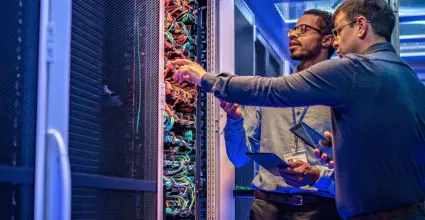
An AI cluster is tens of thousands of accelerators constantly exchanging data to synchronize gradients. If the network can't keep up, GPUs sit idle — and an idle GPU is one you're billing while it produces nothing. Past a certain scale, connectivity decides how many GPUs are actually useful.
What Lumentum Makes: Lasers, Transceivers and Optical Switching
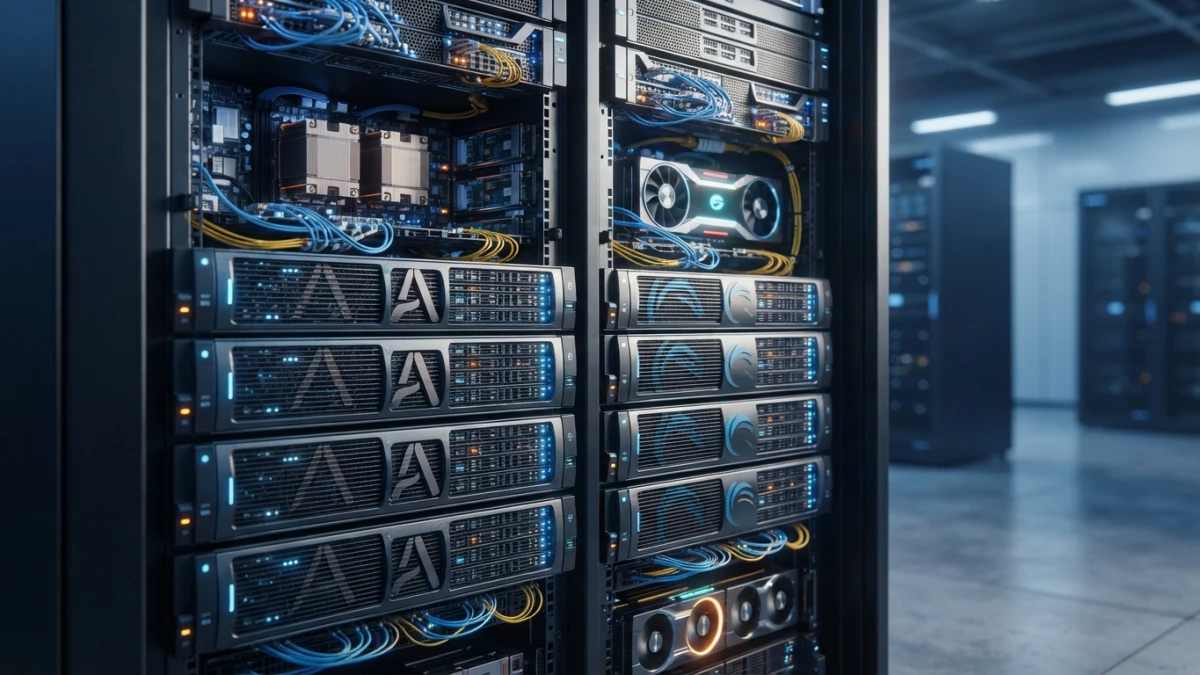
It builds the parts that turn electricity into light and back. A transceiver takes the chip's electrical signal, modulates it onto a laser and sends it down fiber; at the other end another transceiver converts it back. The company also works on optical switching, moving light between ports without intermediate electronics. Unglamorous and absolutely critical.
From 800G to 1.6T and 200G per Lane: Why Copper Runs Out
Each generation raises bandwidth per lane. At 200 gigabits per lane and 1.6 terabit links, copper fails for two reasons: the signal degrades with distance, and energy per bit climbs faster than capacity. Fiber wins on both.
Co-Packaged Optics
The next step is putting the optical converter inside the chip package instead of an external module: less distance, less power, more density. The industry roadmap puts the inflection point in 2028, right when this deal is expected to close. Not a coincidence.
The Precedent: Nvidia's $4 Billion in March
$2 Billion in Lumentum and $2 Billion in Coherent
Nvidia bought neither company: it invested to secure silicon photonics capacity. When the world's largest buyer of accelerators pays to reserve supply, it's saying where it expects a shortage.
Same Diagnosis
Nvidia bought preferential access; Marvell is buying the factory. It's the same pattern we saw with memory: components that aren't the GPU becoming the real limit.
The Numbers Growing Behind the Price
$1.01 Billion in the Last Quarter
Lumentum closed the fourth quarter of fiscal 2026, ended June 27, at $1.01 billion: its first quarter above $1 billion. The reported result carries a loss from a one-off debt restructuring charge, so it doesn't reflect the business.
Up 109% With Guidance Still Climbing
Revenue grew 109% year over year and 24% over the prior quarter. For the next one it guided to $1.225–1.275 billion, near 130% growth. A business doubling sales every year justifies a 23.9% premium.
Custom Silicon and the Race With Broadcom
Marvell designs dedicated chips each hyperscaler commissions for its own workload. It competes with Broadcom there, and this deal adds the connectivity layer to a catalog that already covered compute and switching.
What to Watch Between Now and 2028
The Antitrust Review
Closing isn't expected before the first half of 2028. Analysts quoted in the press estimate 12 to 18 months of review, with intense scrutiny in China. That's an estimate, not an official timetable.
The Currency Is Stock: If Marvell Falls, the Deal Shrinks
It already happened on day one: from $115 billion to roughly $81 billion. If Marvell keeps sliding for two years, Lumentum could receive considerably less than it signed for, and that's where the right to walk away comes in.
If It Breaks
Break fees keep either side from being left waiting: $5.8 billion if Marvell takes a superior offer, $3.2 billion if regulators block it, $2.9 billion if Lumentum walks.
What It Means If You Code or Render
The Network Decides How Many GPUs Are Actually Useful
A poorly interconnected cluster performs below its nominal capacity and you pay the same. It's one reason two providers with identical GPUs give you different latency on the same task.
Optics and Memory: Two Costs That Move Together
Memory got expensive and stays tight through 2028; optics is becoming the next component with a waiting list. When two critical parts get dearer at once, the bill for rented compute tends to follow — same as with the CPU and network demand AI drags along.
What Doesn't Change Tomorrow
None of this touches your editor, your framework or your Blender. It's a deal between two component makers that will take two years to close. What does change, over the medium term, is the price of the infrastructure everything else runs on.
Conclusion
The story isn't the price: it's the diagnosis. AI stopped being a compute problem and became a data-movement problem, and whoever moves data with light just became strategic. If you build on that infrastructure, you'll feel it in latency and in the bill before 2028. We track AI capex component by component on this blog; if you want to see where the chain breaks next, keep reading.