Anthropic's IPO: $16.3 Billion in Revenue, a First Operating Profit and an $80.7 Billion Accounting Loss


Anthropic filed its S-1 on October 26 to list on Nasdaq under the ticker ANT: $16.3 billion in six-month revenue, a first $974 million operating profit and an $80.7 billion loss that is almost entirely accounting.
What Anthropic Filed, and What an S-1 Really Is
Date, Ticker and Lead Bank
On October 26 it made its Form S-1 public with the SEC to list Class A shares on the Nasdaq Global Select Market under the ticker ANT. Goldman Sachs leads the deal and Morgan Stanley is second, within a syndicate of more than twenty banks.
An S-1 Is Not a Quarterly Balance Sheet
It is the document a company uses to ask the market for money: audited years, risk factors, control structure and use of proceeds. That is why it reads as a technical report on the business.
The Numbers That Matter in the Filing
Revenue: $16.3 Billion in Six Months vs. $4.6 Billion in All of 2025
It booked $16.3 billion in revenue in the first half of 2026, against roughly $1.2 billion in the same period of 2025. The whole of 2025 brought in $4.6 billion.
Read also

The First Operating Profit: $974 Million in Q2
The second quarter delivered $11.6 billion in revenue and $974 million in GAAP operating profit, a margin close to 8%. The first had lost $1.7 billion on operations, so the half still shows an operating loss of about $693 million.
The $80.7 Billion Loss and Why It Is Mostly Accounting
Most of it is not cash that left: it comes from revaluing convertibles, derivatives and SAFEs at the price of the latest round. That is roughly $72.4 billion in non-cash charges. It is not running out of money: it priced itself and the rules require that price to show up.
Cash: $131.7 Billion Before Going Public
At the end of June it held $131.7 billion in cash and short-term investments. That figure dismantles the easy read of "it is losing $80 billion a year".
Read also

The Cost of Running a Frontier Lab
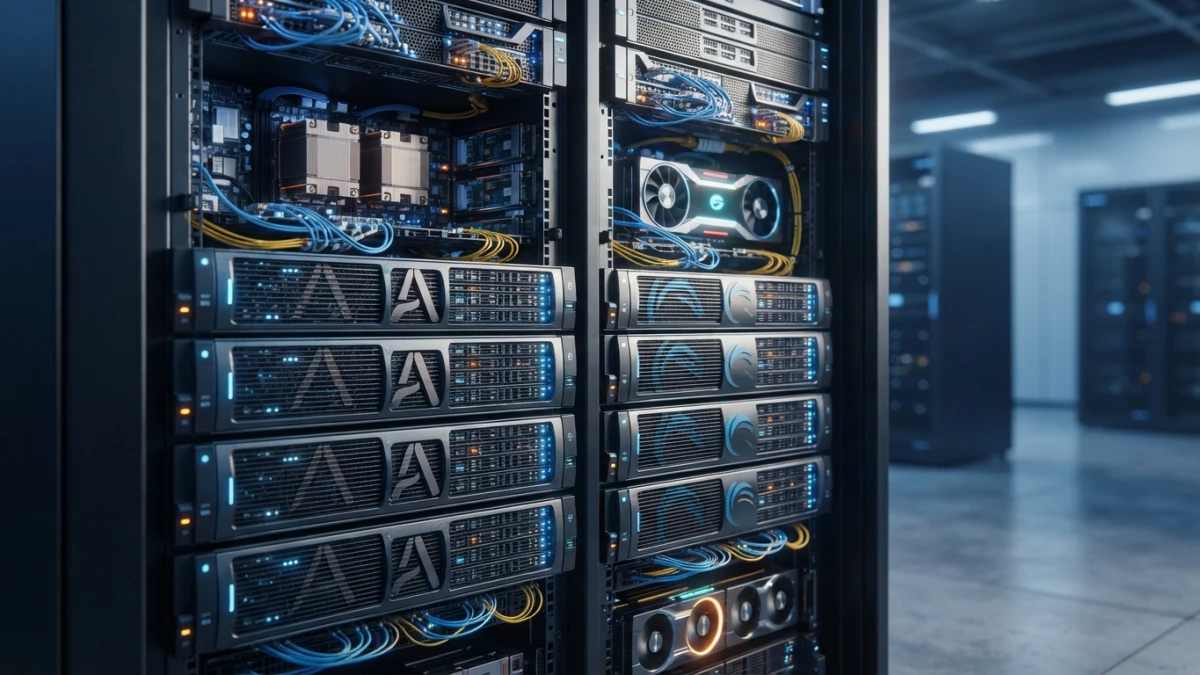
$518 Billion in Compute Commitments Over a Decade
It discloses at least $518 billion committed to cloud, compute and infrastructure over roughly ten years, across six partners. Not money spent: a future obligation. In 2025 it spent $7.33 billion on compute.
Contracts That Cannot Be Canceled
A good share sits in contracts that cannot be canceled. That is the real risk in the business: if demand cools, the bill keeps arriving.
The Akamai Deal: $11.6 Billion Over Seven Years
The Akamai agreement, $11.6 billion over seven years and expandable to about $20 billion, appears in the S-1 inside those commitments. It is CPU capacity, not GPU: AI also needs ordinary servers.
How the Token Business Makes Money
Two Customers, a Quarter of Revenue
Close to a quarter of 2025 revenue came from two customers, and the company warns that many large customers are not tied to long-term contracts.
A $65 Billion Run Rate and Customers Without Long-Term Deals
By the end of July the annualized run rate was $65 billion, against roughly $9 billion at the end of 2025. Revenue grew faster than the cost of serving it, which is why margin crossed into positive territory.
More Than 90% of the Code Was Written by Claude
According to Forbes, citing the filing, more than 90% of Anthropic's code in September was written by Claude. It is a figure the company declares, not an independent audit: its best sales argument and a risk it lists itself.
What It Means If You Build on the API
Margins That Depend on Price Per Token
If margin depends on price per token and that price falls in a competitive war, the provider is under pressure to move limits, quotas and default models. It already happened in September, when Anthropic and OpenAI cut prices on the same day.
Committed Capacity: Why Latency Is Not a Bug
With half a trillion committed years ahead, capacity is tied up in advance. Latency spikes and waitlists answer to contracts, not to a defect you fix with a deploy.
What to Review in Your Integration Before the Listing
Model versioned in configuration rather than hardcoded, a second provider already tested, and cost per completed task instead of tokens. A public company carries quarterly obligations, and those tend to bring price changes and deprecations on short notice.
How to Read the Next S-1 Without Getting Lost
Operating Profit vs. Net Profit
Operating profit measures whether the business makes money before interest, taxes and one-off items. Net profit includes revaluations that move billions without a single dollar coming in.
Compute Commitments vs. Compute Spend
A commitment is what has been signed for the future; spend is what was paid during the year. Confusing the two makes a company look like it spends ten times what it spends.
Conclusion
The S-1 does not say whether the stock is expensive or cheap: it says how money is made and spent in AI, and that part is usable. The valuation is still unpriced, the last round valued it at $965 billion and the press talks about $1.5 to $2 trillion, while the mid-November debut is a report and not a confirmation. One analyst quoted by CNBC called it the most ridiculous IPO of the year given the asking price. We publish on the blog every day.