Blender Is Coming to Android Tablets: An Early Build at BCON26 and a First-Half 2027 Target

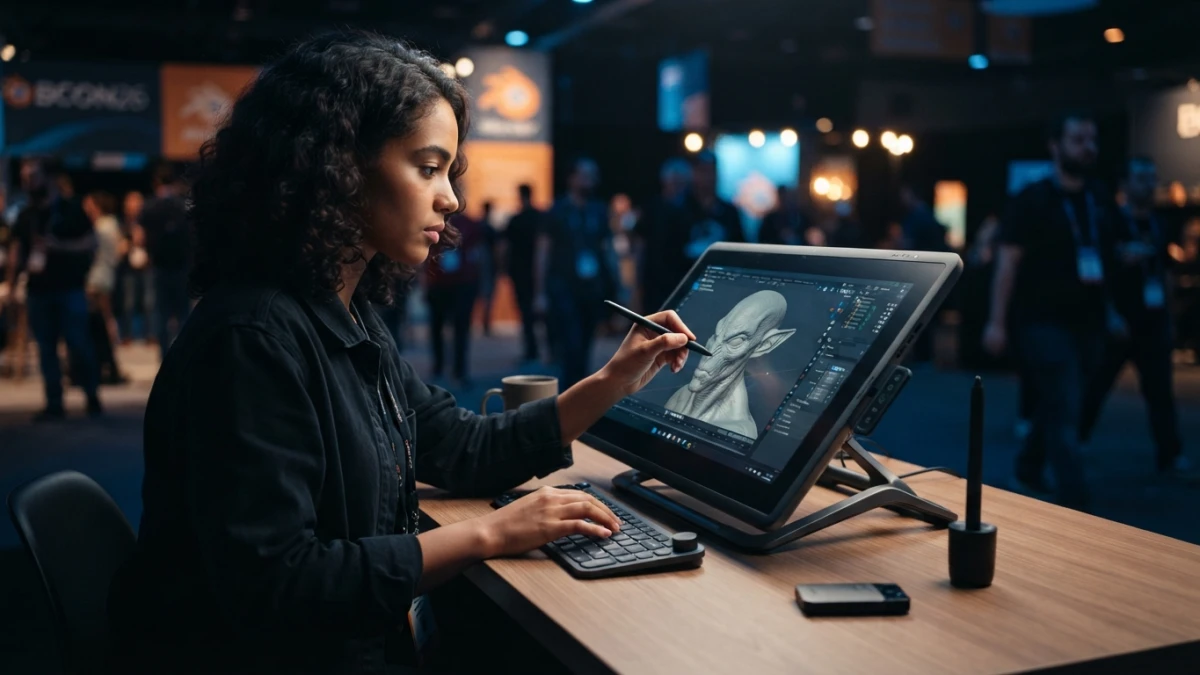
Blender now runs on an Android tablet. At Blender Conference 2026 the team showed an early build on a Wacom tablet with pen and touch input, and the official port targets the first half of 2027 while the iPad version stays on hold.
What Was Shown at Blender Conference 2026
The "Porting Blender to Android" Talk: an Official Project, Not a Side Experiment
At BCON26, held in Amsterdam from September 23 to 25, developer Jonas Holzman gave the talk "Porting Blender to Android". It was not an isolated demo or a third-party port: it was a progress report on the Android Platform Support project, the Blender Foundation's official effort to bring the application to a mobile platform. The session covered the current state of the work, the technicalities of the port and the future of Blender on tablet devices.
Blender 5.3 on a Wacom Tablet: Pen, Touch and What the Demo Showed
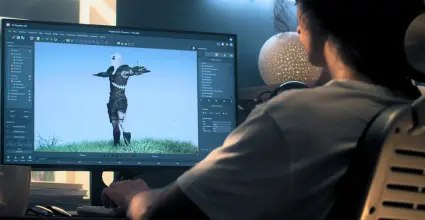
The demo showed an early build running on an Android tablet with a stylus, recorded on Wacom hardware, with touch and pen input working. The build belongs to the 5.3 series, still in development: the current stable release is 5.2.2 LTS. The wording matters: it is a pre-release build, not a final version, and the demo proves it boots and can be used, not how fast it renders.
The Public Roadmap
Coverage from late September and early October places the release in the first half of 2027, with tablets as the stated target. That means there is no official download for regular users today and no exact dates announced: just a target window reported by the media.
Read also
Why Android and Not iPad (Yet)
The iPad Pause Dates Back to February 2026
iPad development was paused in late February 2026, when the team decided to prioritize Android tablets. Based on media reporting, the reasons are the difficulty of reconciling the GPL license with App Store rules and funding priorities. These are earlier decisions: they were not announced at BCON26, they are simply recalled now in the context of the Android port.
A Pause Is Not a Goodbye
The people behind the project have said the iPad work is not abandoned, only set aside. Reading the pause as a permanent goodbye would be an exaggeration, just like claiming that "Blender is coming to Android and leaving the iPad behind": neither is what was actually said.
Wacom and the Blender Development Fund
Since August 2025, Wacom has been a Corporate Patron of the Blender Development Fund, and the partnership focuses on optimizing pen and touch performance and building a next-generation Blender experience for Android tablets. The stylus is not a late add-on: it is the use case that justifies the project.
What Sits Underneath the Touch Interface
Vulkan: the Graphics API That Makes Blender on a Tablet Feasible
Vulkan is Android's modern graphics API, the layer that talks directly to the GPU. A desktop application does not become a tablet app just by enlarging the buttons: it has to be moved onto that API, with its window handling, input model and full graphics pipeline adapted.
arm64 and Android 12 or Newer
The test builds in circulation target arm64, meaning 64-bit ARM, on Android 12 (API 31) or newer, with Vulkan graphics and no fallback. Each requirement should be attributed to the specific build that declares it, because they are not necessarily the final ones for the official release. 32-bit devices and x86 are outside that frame.
Porting a Large Desktop Application
Beyond the interface, there is the question of how files are saved and opened in Android storage, how occasional keyboards and mice behave, and what happens with add-ons. That last part is what usually decides whether an artist can genuinely work away from the desk: not the touchscreen, but whether the .blend file and extensions travel without breaking the pipeline.
The analogy works: moving Blender to Android is like moving a professional kitchen into a camping kitchen. The ingredients, your files, have to travel intact and the burners, the GPU and the stylus, have to put out enough heat. Shrinking the furniture is not enough.
What You Can Try Today and What You Can't
The Demo Build vs Community Ports
What was shown at the conference is the official project. Alongside it, unofficial community ports are circulating, and one of the most visible declares itself explicitly as an "unofficial community port", experimental and not endorsed by the Blender Foundation. The distinction matters: installing software from unconfirmed sources is a real risk, especially when the Foundation itself has not published a stable binary.
Here is what you can and cannot try today:
- You can try: early builds for testing, unsupported and with incomplete features.
- You cannot try: a stable version signed by the Blender Foundation for daily work.
- Do not promise your team: that add-ons and desktop dependencies will behave exactly as they do on a computer.
What a Realistic User Should Expect
An unsupported alpha with parts of the workflow still missing, meant for reporting bugs rather than delivering work. If someone needs Blender today for a project with deadlines, the answer is still the usual one: desktop.
What Changes for a 3D Artist
Sketching, Modeling and Sculpting Away From the Desk
The realistic scenario is working away from home: sketches, first modeling passes, quick sculpting and annotations, finishing the piece on a computer. That is where a tablet with a stylus genuinely competes, because the drawing workflow gains comfort and no longer forces you to open a laptop.
Grease Pencil and Storyboarding
The use case where a tablet and stylus take the lead is drawing: Grease Pencil, concept art and storyboarding. It is exactly the ground where the stylus stops being an extra and becomes the main tool.
The Pipeline Still Ends on a Computer
None of this replaces the desktop in the short term. The value is in splitting the work: the heavy lifting and anything that depends on add-ons stays on the computer; exploratory and manual work finds its place on the tablet.
What Is Still Unknown
There is no price, no confirmed final requirements and no exact release date. It is unclear how Cycles and EEVEE will behave on a tablet, whether any paid model will surround the app, and which specific devices will make the compatibility list. The first-half 2027 target is a reported goal, not a closed commitment.
Blender remains free and open-source software, and no licensing change tied to the mobile version has been announced, so there is nothing to state about pricing.
Conclusion
Blender on Android tablets went from rumor to an official project with a build running on real hardware, but it is still a promise with an approximate date, not a product. What you can do today is understand where it will fit: sketching, early modeling and pen sculpting away from the desk, with the pipeline still finishing on a computer. If you follow the 3D world, this is one of the moves to watch over the coming months, and we will keep covering every step of the port on the blog.