Nvidia and Groq: the Lawsuit Calling a $20 Billion Deal "Not a Merger"

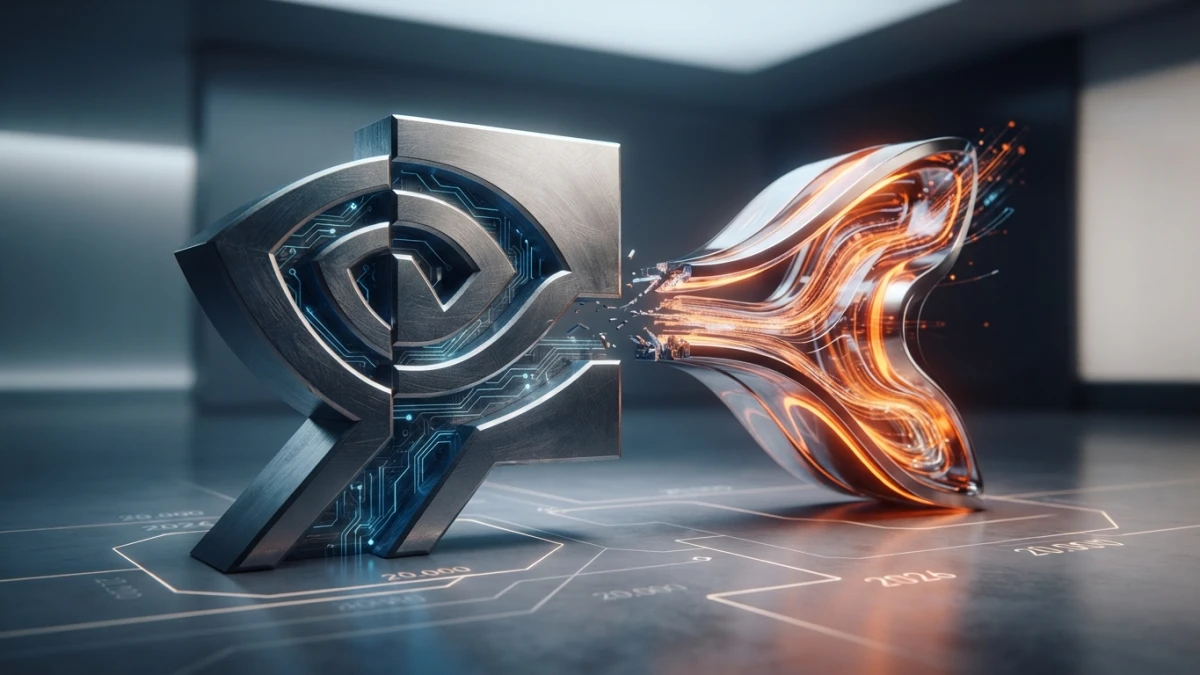
Two former Groq engineers have taken it all to Delaware: they claim the $20 billion Nvidia paid for their technology and team was a purchase dressed up as a license, and that shareholders were left out. Here is what is alleged and what it means for anyone buying AI compute.
What Happened: the October 2 Lawsuit
On Friday, October 2, 2026, two former Groq engineers who were shareholders in the company filed a class and derivative lawsuit in the Delaware Court of Chancery against the board, the officers and the successor entity of Groq. The claim can be summed up in one sentence: the $20 billion deal with Nvidia, presented as a license of its inference technology plus the hiring of its team, left shareholders out and amounts in practice to a disguised acquisition that never went through the process or the vote corporate law requires.
All of that is alleged. The lawsuit is a dated, verifiable fact; what it argues on the merits has not been decided by anyone yet. The outlets that covered it — CNBC, the Financial Times, Law.com, Tom's Hardware — reported the same skeleton: a "reverse acqui-hire", in the phrase used by the legal trade press.
Who Is Suing Whom: the Board, Officers and the Successor Entity
The plaintiffs are two former employees who held shares in Groq. The defendants, according to the filing, are the directors and officers who made the decision, plus the successor entity of the business. The complaint names founder and CEO Jonathan Ross and president Sunny Madra, who joined Nvidia when the deal closed, according to reports. It is better not to repeat the names of the funds involved: if the exact list in the filing is not confirmed by a primary source, omitting it beats getting it wrong.
Read also

The Allegations: Process, Price and a Vote That Never Happened
The filing makes three claims, always according to the lawsuit: that there was no orderly sale process, that the price was unfair to the shareholders left out of the transaction, and that they were never consulted. That is the classic fiduciary-duty pattern: the fight is over how the decision was made and who benefited from it, not over whether the technology was good. The defendants' response, when it comes, will be the other half of the story, and today it has not been written.
What a Derivative Suit Is and Why It Lands in Delaware
A derivative suit is one brought by a shareholder on behalf of the company itself, alleging that those who run it breached their duties and harmed the whole. Delaware is the natural forum for this kind of dispute because most US tech companies are incorporated there and its Court of Chancery is the reference court for corporate conflicts. The fact that the suit is also a class action means it seeks to represent more shareholders in the same position.
How the Nvidia Deal Was Structured
$20 Billion, of Which $17 Billion Is a License
According to the Financial Times, the total deal is worth roughly $20 billion and breaks down in a very specific way: about $17 billion corresponds to a non-exclusive license of Groq's inference technology, with the proceeds distributed among investors. That single word — license — is the linchpin of the case, because it defines how the transaction is accounted for and which regulatory reviews it triggers or avoids.
From Licensing to Hiring: the Leadership Team and 150 to 200 Engineers
The license was paired with moving people: the leadership team went to Nvidia and, according to the figure cited in the lawsuit, between 150 and 200 Groq engineers went with them. The Financial Times described it as hiring "almost all" of the company's engineers. That package — technology plus the team that built it — is what allows talk of the economic effect of a merger without a formal merger, and it is exactly what the filing questions.
Groq Still Exists, but It Is No Longer the Same Company
The deal was announced months before the lawsuit and the company described it as a non-exclusive license agreement, insisting it would keep operating separately. Later reports describe a clear change of course: since then Groq has been pivoting toward the business of serving cloud compute. In other words, the brand is still alive and billing, but the technology and the team that gave it its competitive edge are no longer in-house. That contrast is, at bottom, the plaintiffs' central argument.
What the LPU Is and Why Nvidia Wanted It
An Inference Chip: Deterministic, Low-Latency and Not a GPU
An LPU, or Language Processing Unit, is a chip designed specifically to run already-trained models, meaning the inference phase in which a model answers. Its approach is deterministic and aimed at low latency and predictability, unlike a GPU, which is general-purpose and serves both training and inference. Groq originally introduced that architecture under a different name and rebranded it once the business turned to language models. That chip is what Nvidia wanted.
From Its Own Silicon to a "Neocloud" Running on Nvidia GPUs
The detail that closes the loop: after the deal, Groq has been pivoting toward a cloud service model built on Nvidia GPUs. It is the turn of a company that competed on its own silicon to one that sells compute on someone else's. For technical readers it is a useful snapshot of the market: inference stops being a race of proprietary designs and becomes, increasingly, a race for capacity and price.
The Size of the Deal Against Nvidia's Previous Acquisitions
To put $20 billion in perspective: according to reports, Nvidia's largest acquisition to date was Mellanox, at around $7 billion. The figure under discussion is nearly three times that, and that scale is what explains why the legal design of the deal is under scrutiny. It is also worth distrusting the valuations of Groq circulating online — the numbers do not agree across outlets of differing rigor — and not using them without a primary source.
The Pattern Regulators Are Worried About
The Purchase That Doesn't Look Like a Merger, and the Review That Never Starts
In the United States, a merger or acquisition above a certain threshold requires notifying competition authorities before closing. A technology license plus the hiring of a team can stay under that radar even when the economic effect is that of buying the company: people and assets change hands, but the corporation lives on paper. That is the heart of the debate, and it explains why this deal has been called "the merger that isn't one".
The Antitrust Probe and the Pushback in the Senate
Alongside the lawsuit, and according to reports, the Department of Justice opened an investigation to determine whether the deal was designed precisely to avoid conventional merger review. These are two separate tracks and should not be conflated: one is a corporate dispute between shareholders and officers in Delaware; the other is a federal competition investigation. In the Senate, several lawmakers have also focused on acquisitions disguised as licenses.
What Would Have to Be Proven for It to Be Something Else
The legal point is not the name of the contract but its effect: if what changed hands is equivalent to control of a business, the wrapper matters less than the substance. The lawsuit still has to clear its own procedural stages before a court reaches the merits, and there is no outcome. What is reported here is what is alleged and what is being investigated; who is right will be decided by the court.
What It Means for Developers and for Anyone Buying Compute
Inference: Who Serves It, at What Latency and at What Price
If the design of inference chips concentrates in a few hands, the competition on latency and price per token — the one the apps we build depend on — is what is at stake. It is the same vector that moves when a company like Anthropic signs billions for CPUs or when capacity is locked in with debt earmarked to buy Nvidia chips: compute is financed by, and distributed among, fewer and fewer players.
If You Depend on a Provider, Look at Who Really Owns the Technology
The practical lesson is simple: the brand that bills you may not be the one controlling the technology you use. When you sign up for an inference API or a cloud service, it is worth knowing whose silicon it runs on, who maintains it and what would happen to your contract if that piece changed hands. In markets consolidating this fast, that question is less paranoia than risk management.
If You're in a Startup: Licenses, Shares and What a Board Signs
The case is also a practical lesson in three unglamorous things that are expensive to learn late: what rights an employee with shares actually has, what a board can decide without consulting shareholders, and why a software license deserves a careful read before signing. Add the context: memory scarcity and component prices keep making compute more expensive, as Micron warned as it closed its fiscal year.
What Comes Next
The next steps are clear and none is quick: the lawsuit has to work through its procedural stages in Delaware before the merits are argued, the competition investigation will determine whether there is anything to challenge, and more deals of the same shape will probably end up in court. It remains to be seen what happens to the cloud side of the business and whether this case changes how AI companies are bought in the years ahead.
Conclusion
A $17 billion license and a team of engineers can produce the same effect as a merger without going through merger review, and that is the problem a court and a regulator are now arguing over. If you buy compute or build on AI providers, the story hits you on the practical side: it pays to know whose technology holds up your product. We will keep following the case on this blog and report what gets decided and how the inference market changes.