Alibaba Unveils the Zhenwu V900: 216 GB Per Card, 500,000-Chip Clusters and 20 GW of Data Centers on the Horizon

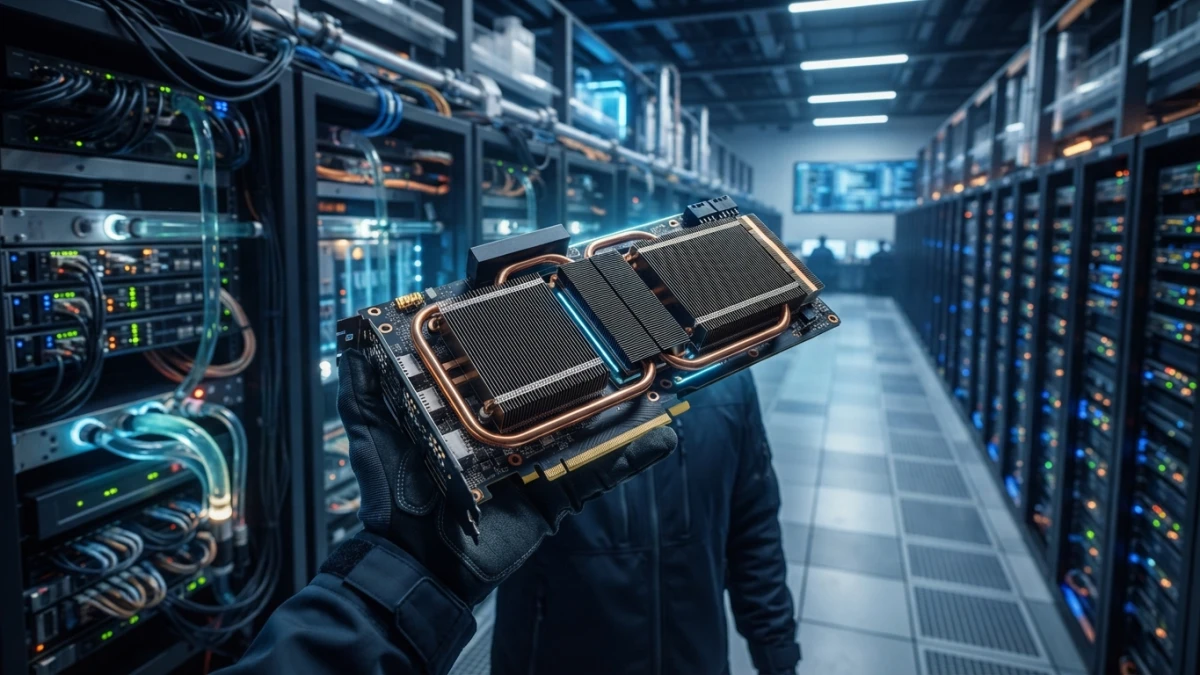
The Alibaba Zhenwu V900 is the company's new AI chip: it trains and infers with 216 GB of memory per card, clusters of up to 500,000 units and a target of 20 GW of data center capacity by 2032. Here are the numbers and the fine print.
What Alibaba Announced at Apsara Conference 2026
On September 22, 2026, at Alibaba Cloud's Apsara Conference in Hangzhou, CEO Eddie Wu unveiled the Zhenwu V900 accelerator, built by T-Head (Pingtouge), the group's semiconductor unit. Alibaba describes it as China's most powerful AI chip; specialist press carried the announcement, but no independent measurement has been published.
The Zhenwu V900: One Chip for Training and Inference
The V900 unifies both phases of AI: the same accelerator trains models and then serves them to users, instead of separate hardware for each phase. The company claims three times the performance of its previous generation, the Zhenwu M890, which specialist press describes with 144 GB of HBM and a proprietary PPU architecture built around a Transformer core. That is a comparison against its own chip, not against Nvidia.
216 GB Per Card, 1,200 GB/s of Interconnect and Clusters of Up to 500,000 Cards
The figures on the table: 216 GB of memory per card, 1,200 GB/s of inter-chip interconnect bandwidth, native FP8 and FP4 low-precision compute, and deployments of up to 500,000 cards. These are vendor numbers repeated by the press: a commercial spec sheet, not an audited one.
Read also

Mass Production in Q1 2027 and a J900 Planned for 2028
The V900 is not on sale today: mass production is planned for the first quarter of 2027. At the same event Alibaba teased a Zhenwu J900 built on its own parallel computing architecture for March 2028, plus new Yitian server CPUs for the third quarter of 2027. All written in the future tense.
The Numbers Versus the Fine Print
The "Three Times Faster" Claim Is Measured Against the M890
The multiplier is measured against the company's own previous generation. It is not "three times faster than a high-end Nvidia GPU": no benchmark supports that, and tripling declared performance between your own generations is what two years of work normally delivers, not a revolution.
The H200's 141 GB: A Capacity Comparison, Not a Performance One
Several outlets highlight that the V900's 216 GB beats the 141 GB of Nvidia's H200. That is a memory comparison against a chip from the earlier Hopper generation: more memory lets a larger model fit without being split across cards, but it says nothing about compute speed or power efficiency.

What No Independent Party Has Measured Yet
As of September 2026 there are no third-party benchmarks, no per-card price, no commercial availability and no cost-per-token figures. All that can be published is what the company stated and what the press reported while citing it.
Why Memory Is What Decides an AI Chip
Capacity Per Card, Bandwidth and Low-Precision Formats
With large models the practical limit is usually memory rather than FLOPS: very fast hands are of little use if the model does not fit on the workbench and has to be fetched down a narrow corridor on every pass. FP8 and FP4 shrink the space each weight takes and speed up the operations, at the cost of precision that training compensates for.
What a Cluster of Hundreds of Thousands of Accelerators Implies
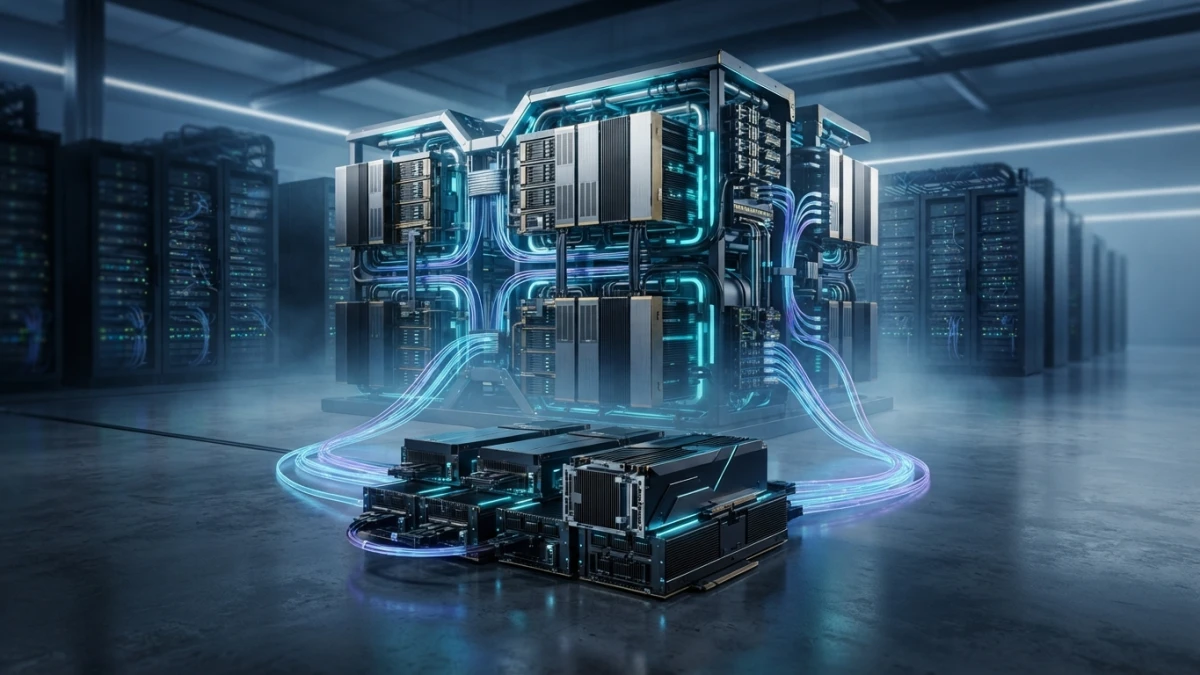
At that scale the problem is not cards but networking, cooling, power and orchestration software. The 500,000-unit figure is mostly a statement about the scale at which Alibaba wants to run its own cloud.
The Full Stack: Not a Chip, a Strategy
Panjiu Servers, Yitian CPUs and Data Centers
The announcement includes Panjiu supernode servers, the Yitian CPU roadmap and the infrastructure that houses them. Owning the chip, the server, the cloud and the model lets a company tune cost and performance across the whole chain, something a customer who only buys GPUs cannot do.
Qwen Models of 5 to 10 Trillion Parameters and What They Do to API Pricing
Eddie Wu spoke of next-generation Qwen models in the 5 to 10 trillion parameter range: that is a stated plan, not a published model. If it lands, more large open models push API prices down.
More Than 20 GW by 2032 and the Spending Already Reported
Alibaba says it wants to operate more than 20 GW of global data center capacity by 2032 and announced investments above USD 53 billion over three years. That is a plan, not spending already made: the reported figure is capital expenditure of RMB 67.7 billion for the June quarter, 75 percent more than a year earlier.
The Uncomfortable Context: Export Controls
US export controls keep Nvidia out of the high end of the Chinese market, and that gap is the reason the V900 exists: an "equal footing" comparison makes no sense when the rival cannot sell its top end there. Last week Huawei pulled its Ascend 960DT forward, so the real competition today is between Chinese vendors fighting over the space the restrictions left open.
What It Changes If You Build With AI
More Chinese Compute in the Cloud and Model Portability
For developers, what matters is what shows up in a cloud catalog: more capacity in China means more competition in rented compute, with an indirect effect for those outside Asia. The announcement only closes with Qwen in the picture, own chip, own cloud and own models, which reinforces the case for keeping inference code portable across APIs.
How to Read a Hardware Announcement Without Believing the Slide
Three questions are enough: what product is the claimed gain measured against, does an independent measurement exist, and when can you buy it? If the answers are "our own last one", "no" and "in a few quarters", you are reading a roadmap, not a product.
Conclusion
The Zhenwu V900 is a serious announcement with concrete numbers and a set of promises years out. What is solid: memory per card, training and inference unified in one part, and a stack that runs from chip to model. What is missing: 2027 production, independent benchmarks and prices. You can follow this ground in our analysis of Huawei's Ascend 960DT, in the review of the AI chip battle and in our note on Qwen3.8-27B. The blog keeps covering technology with a critical eye: come back if hardware and AI infrastructure are your thing.