VMAF: The Netflix algorithm that revolutionized streaming quality.


The way we enjoy streaming content has changed drastically in recent years, and one of the main drivers of this transformation is VMAF, the innovative algorithm developed by Netflix. But how does the platform ensure that the quality of its videos remains high even with limited internet connections? Let’s discover how VMAF has revolutionized the streaming sector and what makes it so different from traditional quality measurement methods.
What is VMAF?
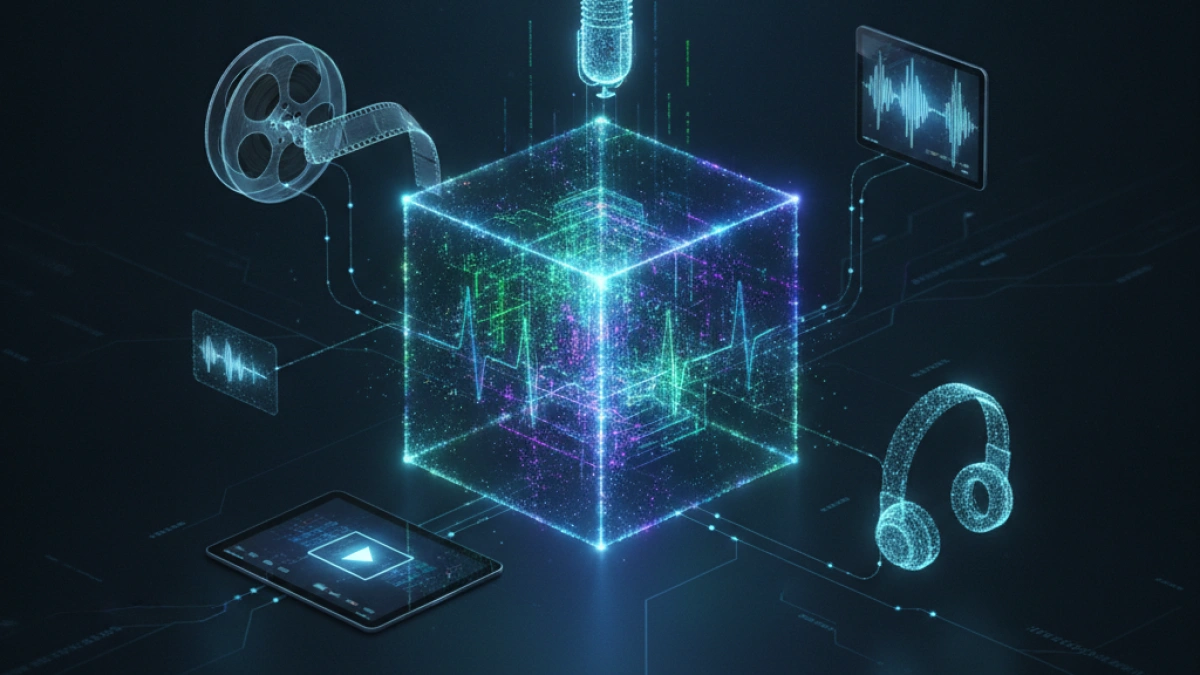
VMAF, which stands for Video Multi-Method Assessment Fusion, is a video quality assessment system created by Netflix and launched as an open-source project in 2016. Unlike older approaches that performed pixel-by-pixel comparisons, VMAF employs machine learning techniques to predict how a human being will perceive the quality of a compressed video compared to the original.
The primary goal of VMAF is to make a video occupy as few megabytes as possible without the average viewer noticing any loss of quality. This has been crucial for improving the viewing experience and optimizing bandwidth usage.
The Problem with Traditional Metrics
Before the advent of VMAF, the streaming industry relied on quality metrics like PSNR (Peak Signal-to-Noise Ratio) and SSIM (Structural Similarity). These traditional metrics had significant limitations. They were "rigid," meaning that a slight adjustment in brightness or a minor blur could result in very low PSNR scores, even though a human viewer might find the video perfectly acceptable.
Read also

Moreover, these metrics did not consider how the human eye perceives content. For instance, our eyes are highly sensitive to certain visual elements, such as faces and defined edges, while they may overlook loss of detail in less critical areas, such as dark scenes or fast-moving shots.
How VMAF Works and How It Is Measured
VMAF functions by combining several image and motion analysis algorithms, along with a model trained from evaluations of real people during lab experiments. This results in a unique score that ranges from 0 to 100:
- 100: The compressed video is identical to the original.
- 93 - 95: This is the "golden zone," where the vast majority of viewers would not notice a difference from the original source.
- Below 80: In this range, the loss of quality and compression artifacts may become apparent to the human eye.
Comparison: Traditional Metrics vs. VMAF
Feature Traditional Metrics (PSNR / SSIM) VMAF (Netflix)
| Based on | Pure mathematical formulas | AI trained with human perception
| Considers motion | Poor or none | Yes, analyzes temporal coherence
| Perceived accuracy | Medium / Low | Very High
| Main use | Basic technical testing | Real bandwidth optimization
Read also


The Impact of VMAF on Your Internet Connection
The implementation of VMAF has allowed Netflix to develop advanced techniques such as Per-Shot Encoding. This method allows compression to vary depending on the content of each segment of film. For example, an action scene filled with explosions requires a higher bitrate (bandwidth) to maintain quality, while a quieter scene with dialogues and a stationary background needs considerably less.
Thanks to VMAF, Netflix has managed to reduce data usage by 20% to 30% without compromising visual quality, resulting in a significant savings of petabytes of traffic globally.
Can VMAF Be Used Outside of Netflix?
Yes, VMAF is available as an open-source project and has established itself as the gold standard in the industry. Platforms like YouTube, Vimeo, and Twitch regularly implement it in their processes. Additionally, for those familiar with FFmpeg, VMAF is fully integrated into this system. Any user can utilize a simple command in the terminal to compare two videos and obtain the VMAF score in just a few minutes.
Conclusion
VMAF has shown that understanding human perception is essential for effective video compression. Rather than relying solely on mathematical calculations, this algorithm has taken the industry to a new level, allowing viewers to enjoy 4K and HD content while using a fraction of the bandwidth required just a decade ago. The evolution of VMAF highlights how innovation can transform the way we consume online entertainment.
For more information on topics related to technology and streaming, keep reading the blog.