Ten countries sign the San Francisco Declaration to secure the AI supply chain


On Sunday November 15 the United States and nine partners signed the San Francisco Declaration to protect the software, components and know-how the AI supply chain depends on. Three days later, Trump and Xi Jinping meet in Shenzhen.
What Was Signed in San Francisco on November 15
The text is called the San Francisco Declaration on the Secure Foundations of Enduring Prosperity and it was signed at the Pax Silica Founders Retreat, with Jacob Helberg, Under Secretary of State for Economic Affairs, chairing the convention. Per the State Department release, it rests on one idea: economic security is part of national security. It is not a treaty, it is a political commitment to cooperate.
Who Signed: Ten Countries, Not "the West"
The United States plus nine Pax Silica participants: Australia, India, Israel, Japan, Qatar, Singapore, South Korea, the United Arab Emirates and the United Kingdom. Some outlets count eight partners and leave Singapore out; the State Department release is the reference. The mix matters: this is not a Western bloc, it is a network of countries that buy, build or ship compute parts.
What the Text Covers
Four layers: critical goods, software, knowledge materials and components. "Knowledge materials" is the diplomatic term for know-how, meaning designs, documentation and manufacturing procedures. The text does not stop at physical hardware.
Read also

The Shared Catalog: What It Is and What It Is Not
The core commitment is to jointly identify which AI technologies are sensitive and which chains are critical, and to protect them from theft, unauthorized transfer and hostile influence. That is where the practical value of the announcement sits.
A List That Is Not Public Yet
The catalog is going to be built; no list has been published today. Any article that names the technologies inside is making them up. That detail decides whether the framework stays a press release or becomes a real control list for exporters and capacity buyers.
The October 16 Precedent: China Already Published Its Own
On October 16 China added 23 AI technologies to its export catalog, with thresholds for weights, agents and chip design. We covered it in this piece on the Chinese catalog. Two blocs building lists of the same things without sitting down to compare them.
Three Days Before Shenzhen
On Monday the 16th, China's foreign ministry confirmed the summit. That changed the week's calendar: the declaration is no longer read on its own, it is read as the run-up to a meeting.
The November 19 Three-Way Summit
Xi Jinping, Vladimir Putin and Donald Trump will meet on November 19 in Shenzhen, inside the APEC gathering. The agenda is broad, but the technology axis arrives loaded: two days earlier, ten countries had just committed to protecting the AI supply chain.
What Is Actually at Stake in Chips
Reuters headlined that Monday that chip tensions will loom over the meeting: the prospect of tougher US controls on Chinese access to advanced AI chips overshadows the rest of the agenda. The same report mentions AI safety steps from both sides without verifiable detail, so there is nothing more to add.
The Three Chip Bills Waiting in the Senate
The legal layer is separate from the diplomatic one. The Senate NDAA managers' amendment would carry three bills: the AI Overwatch Act, the MATCH Act and the Chip Security Act. None of them is law. The House passed its NDAA version on July 22 and S. 4784 has not reached the Senate floor, so the package waits for the lame-duck session.
AI Overwatch Act: 30 Days to Review a License
It requires notifying Congress of advanced AI chip sales before approving them and gives 30 days to review and block them. The House version, H.R. 6875, cleared the Foreign Affairs Committee 42-2 in January 2026; the Senate version, from Banks and Warren, was introduced in May.
Chip Security Act: Verify Where the Hardware Is
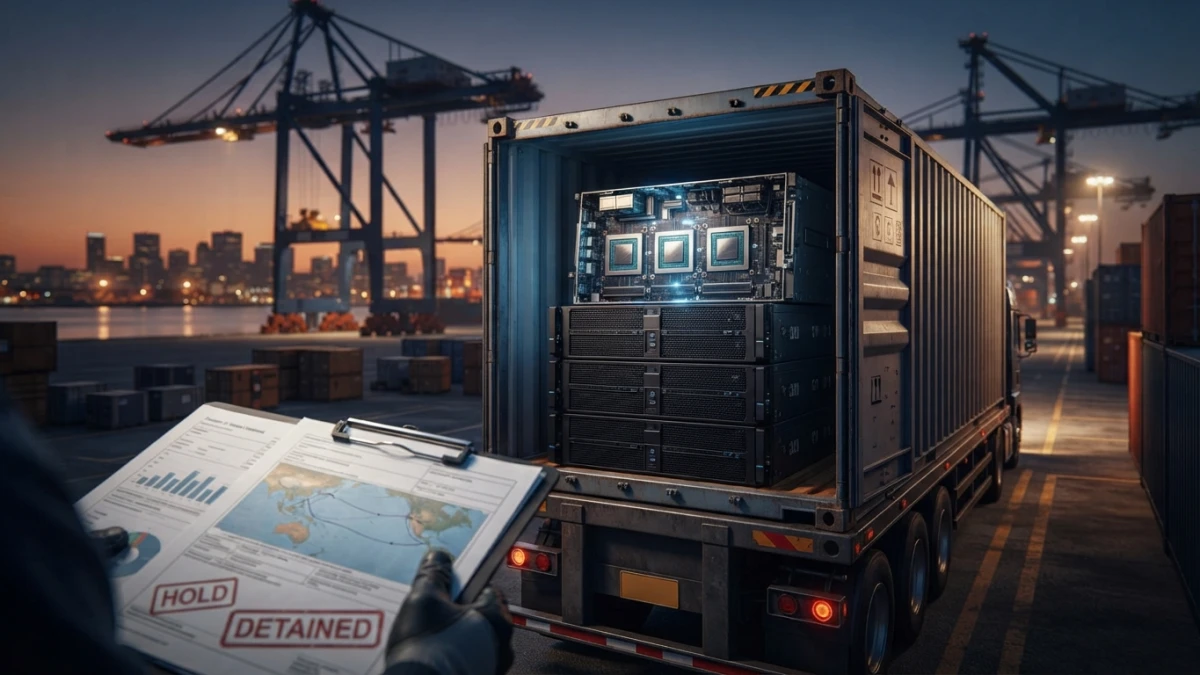
H.R. 3447, approved 42-0 in committee in March, adds location verification to detect and curb smuggling. It is the piece closest to daily operations: if hardware can be located, it can be audited. The case that put the topic on front pages this month is covered in our story on the Nvidia server smuggling case.
MATCH Act and the Lame-Duck Calendar
The third piece deals with counterparties and manufacturing equipment, with no verified figures of its own. A November 13 update from an NDAA tracker reports that Senator Mast considers it "very likely" that export controls will be in the final text. Likely is not passed.
What It Means If You Build
If you buy GPUs, price stops being the only question: hardware provenance and the supplier's country enter the purchase record, especially if your customer has a compliance team. If you rent capacity, the cloud contract starts to include where the cards come from.
The declaration also covers software and knowledge materials, meaning anyone who downloads weights, fine-tunes on third-party data or moves technical documentation across borders. None of this changes a line of code today; it changes who you buy compute from tomorrow and which paperwork you will be asked for.
Conclusion
The San Francisco Declaration sets no enforceable rule: it sets a direction and a list yet to be built. What is verifiable is the calendar: a summit on the 19th, the NDAA in lame-duck and three bills waiting. Those are the dates to watch. And the Nvidia case explains why chips sit at the center. We keep covering it on the blog.