Apple Sues OpenAI: The Legal Battle Over AI Hardware

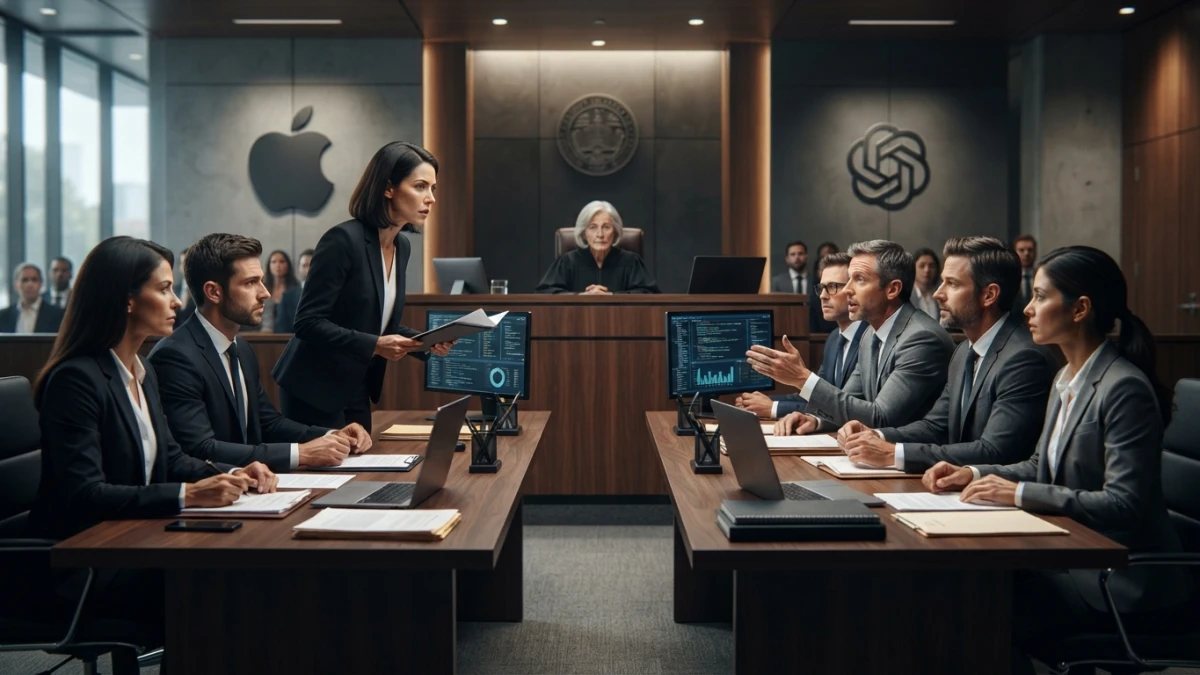
On July 10, 2026, Apple filed a lawsuit against OpenAI in the federal court of the Northern District of California, accusing the company of a coordinated campaign to steal trade secrets for its upcoming AI hardware device. In the first week of August the dispute escalated: Apple requested a court order, OpenAI moved to dismiss the case, and the litigation became the reference legal battle of the summer in the industry.
The Lawsuit: What Apple Alleges
A Coordinated Campaign to Steal Trade Secrets
According to the complaint, OpenAI orchestrated a deliberate campaign to access confidential Apple information, including internal documentation about hardware and components, and allegedly reached out to Apple staff to obtain details of unannounced projects. Apple argues that this material was never public and that OpenAI's use of it amounts to misappropriation of trade secrets protected under U.S. law.
The Target: OpenAI's AI Hardware Device
The accusation is not abstract: OpenAI has spent months working on a personal AI device with its own hardware components, a project that would compete directly with Apple's hardware plans. The lawsuit claims that the alleged stolen secrets would have accelerated that development and handed OpenAI an unfair advantage in a race where hardware, not just software, defines the future of consumer AI.
August Escalation: From Injunction to Dismissal
August 4: Apple Seeks a Preliminary Injunction
On August 4, Apple asked the court for a preliminary injunction to block OpenAI from using the alleged trade secrets while the case proceeds. This type of order freezes the use of disputed information before the merits are decided, and whether it is granted will be an early signal of the strength of the case.
August 5: OpenAI Moves to Dismiss the Lawsuit
A day later, OpenAI filed a 31-page motion to dismiss, calling the accusations unfounded. The company argues that the complaint fails to identify concrete trade secrets and that the alleged contacts with Apple employees do not amount to a legal violation.
August 6: OpenAI Strikes Back over Apple's Security
On August 6, OpenAI went a step further and filed a brief arguing that Apple's own security practices undermine its trade secrets case. It also accuses the company of using the litigation to slow down a competitor in the emerging AI hardware market.
What's at Stake: Hardware, an IPO, and the Personal AI Device
The case adds uncertainty to two key fronts for OpenAI: its plans to ship its own hardware and its possible initial public offering. Industry analysts note that a prolonged litigation could delay the product roadmap, complicate fundraising, and cool investor interest in an offering that seemed close. For Apple, on the other hand, the lawsuit is also a public statement: the company wants to make clear that it will defend its intellectual property against a rival aiming for the same ground.
Both Sides' Arguments, Summarized
In a few lines: Apple claims there is a deliberate campaign of trade secret misappropriation with a clear beneficiary, OpenAI's future AI device. OpenAI responds that the accusations are vague, that no secrets have been identified, and that the real goal of the trial is commercial, not legal. The dispute will unfold over the coming months between the injunction request, the dismissal motion, and the discovery phase.
Context: The Week AI Moved the Markets
The legal escalation coincided with a week of stock market euphoria around AI. While Apple intensified its offensive, Amazon surpassed $3 trillion in market capitalization for the first time, becoming only the fifth company in history to reach that figure, driven by its cloud business and the demand for AI services.
Amazon Tops $3 Trillion
Amazon's milestone is not anecdotal: its cloud division grew 37 percent year over year and brought in $42 billion in the last quarter, and analysts tie that growth directly to the generative AI boom. The coincidence underscores that the AI race is also played out in the markets, not only in the courts.
What to Expect in the Coming Months
The next milestones in the case will be the decision on the preliminary injunction and the ruling on the motion to dismiss. If the court grants the order, OpenAI will have to justify any use of the disputed information; if the case is dismissed, Apple loses its main legal avenue. Either outcome will set the tone for the AI hardware race in the coming years.
Conclusion
The battle between Apple and OpenAI is far more than a dispute between two giants: it is the first major legal test of how the AI hardware market will be divided. Following the case's timeline is following the map of the industry's immediate future. If you are interested in the intersection of technology and business, keep an eye on the next news posts on the blog.