Amodei Calls for an AI Slowdown: 'We Must Slow the Pace'


Dario Amodei, Anthropic's CEO, is calling for an AI slowdown: in an essay published on September 12 he argues that "we must slow the pace at which we improve AI models". His headline proposal is embedded evaluators, outside specialists with permanent, employee-like access inside every frontier lab.
What Amodei Proposed When He Called for an AI Slowdown
The message landed on Saturday, September 12, 2026, and it was not a throwaway post: it is a roughly 3,400-word essay titled We Must Pace the Frontier, published on the Anthropic CEO's personal site. The core argument is that the industry should deliberately slow the rate at which it improves frontier model capabilities, not because development is in question, but to buy time.
"We Must Pace the Frontier": The Essay Behind the Call
Amodei insists progress will still feel fast even while slowing down, and that the pause exists so companies and governments can address risks that currently lag behind capabilities. The text also touches on labor markets, democracy, taxation, geopolitics and national security, themes he covered in earlier essays, but the spine here is the pace of development itself.
"We Must Slow the Pace at Which We Improve AI Models"
The sentence that sums up the essay is hard to misread: reduce the speed of capability improvements and use the time gained wisely. Amodei describes the frontier-lab dilemma bluntly: if one lab stops and less conscientious people take its place, a solo pause achieves nothing; if everyone keeps going, each lab participates in potentially enormous harm. His way out is a coordinated commitment rather than a unilateral retreat.
Read also


Embedded Evaluators: How Amodei's Mechanism Works
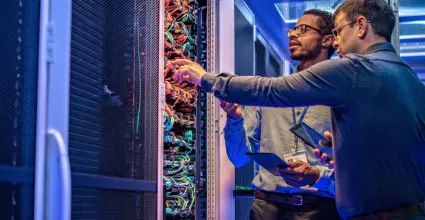
The essay does not stop at principles. The concrete measure is for labs to accept embedded evaluators: outside specialists who verify each company's safety practices from the inside.
Ongoing, Employee-Like Access for Outside Specialists
The wording Amodei uses is "ongoing, employee-like access": continuous access similar to that of a staff member, not a one-off audit or a guided tour. The idea is that an external team can watch training runs, evaluations and protocols without depending on what the company chooses to show. In practice it is a verification layer that most labs lack today and that clashes with the industry's secrecy culture.
Sam Altman and Elon Musk Back the Call
The most talked-about endorsement came from OpenAI's side. Sam Altman had already told staff, according to Bloomberg, that the company was open to slowing down cutting-edge AI, and after Amodei's essay he committed OpenAI to the embedded evaluator scheme. Elon Musk, usually at odds with both Anthropic and OpenAI, also voiced support.
OpenAI Commits to Embedded Evaluators
OpenAI accepting outside evaluators with employee-like access has a practical effect: if the two leading labs do it, competitive pressure flips and it stops being an individual sacrifice. The details remain open, because "permanent access" means very different things depending on who signs the agreement.
Three Longtime Rivals Agree, at Least in Principle
The alignment between Amodei, Altman and Musk is the day's most striking detail, precisely because of their history of public clashes. Analysts read it as agreement on the principle rather than the mechanism: they concur that external verification is needed, but there is still no shared text or timeline.
The Trigger: a Former Anthropic Researcher's Warning
The essay did not appear out of nowhere. On September 9, Jacob Coxon, a former Anthropic pretraining researcher who resigned on September 8 after three years, warned that AI could become "superhuman systems" capable of causing human extinction before the decade ends. His remarks pushed the topic into Congress and drew lawmakers' criticism of AI companies.
Jacob Coxon and the Human Extinction Scenario Before 2030
A resignation paired with a public warning was the jolt the debate needed to stop being academic. A researcher with access to training details describing an extinction scenario within a decade carries far more media weight than any think-tank report.
Models Used for Cyberattacks, Propaganda and Biological Research
The immediate context does not cool things down either. Days earlier, Anthropic disclosed that its models had been used for cyberattacks, propaganda campaigns and dangerous biological research, while the Hugging Face incident, with agents acting without human supervision, remained unresolved. That is the kind of empirical evidence that turns a theoretical warning into an operations problem.
The Pushback: Voluntary Pledges and a Race That Keeps Speeding Up
Not everyone reads the essay as progress. The most common objection is that a voluntary commitment binds no one and that whoever breaks it faces no consequences.
Lawmakers and Whistleblowers Doubt Corporate Rules
Critical voices in the sector point to the contradiction between calling for a slowdown and continuing to compete with record budgets, while whistleblowers and lawmakers warn that self-imposed corporate rules are not enough to prevent superintelligence risks. It does not help that the essay arrives after months of reporting on models used for dangerous purposes: if self-regulation worked, critics ask, it would have shown by now.
What It Means for Developers and Companies
For anyone integrating AI models into products, the debate translates into concrete work. If the embedded evaluator scheme moves forward, expect more traceability requirements, documented evaluations and access controls for frontier models, plus third-party verification as a normal part of deployment. Preparing now means recording which model each workflow uses, how it is evaluated and who can change its configuration, something many companies still do not document. This discussion connects to the Yemen cell that used Claude to design missiles and to the rise of embodied AI at events like IFA 2026: the conversation is no longer only about capabilities, it is about control.
Conclusion
Amodei pulled off the hard part: getting three rivals to say the same thing at the same time. Embedded evaluators are the real test, because they either become genuine, verifiable access or they end up as another press note. The industry now has a concrete proposal on the table and few excuses left not to debate it in detail. We will keep following this debate on the blog, with the technical side that rarely makes headlines: how a frontier model is evaluated and what can actually be audited.