The Senate Investigates Flock's AI Cameras: 120,000 Plate Readers and a 13-Day Wrongful Arrest

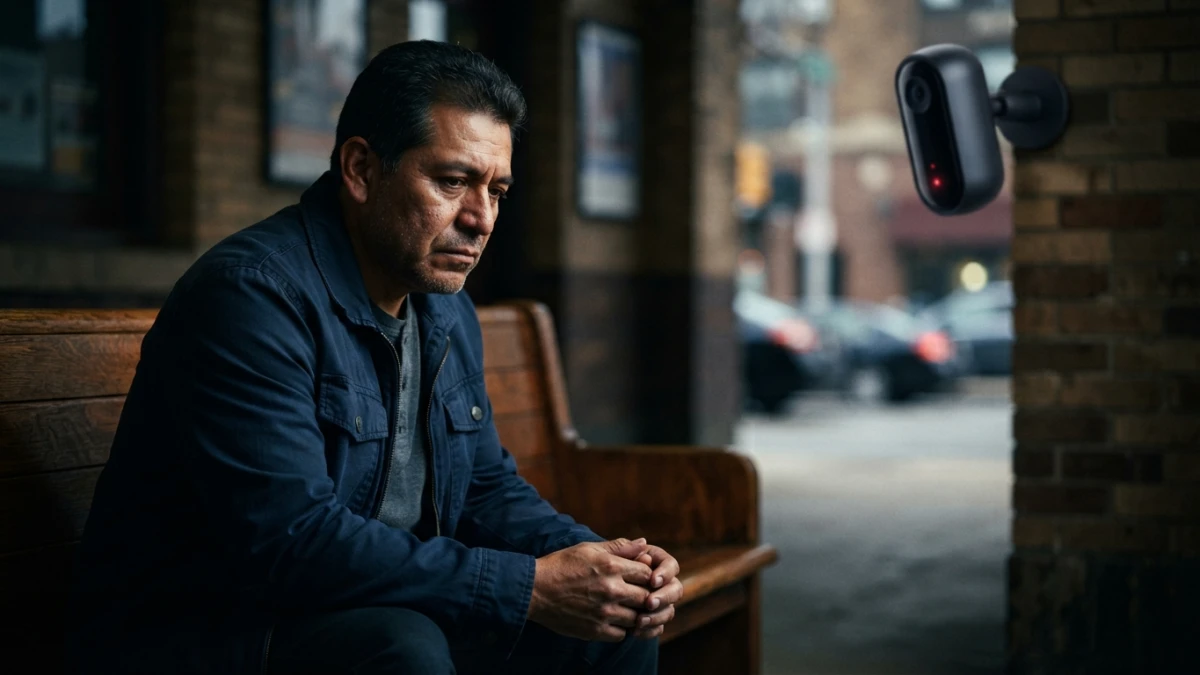
On September 23 the US Senate put Flock cameras in the national spotlight: its network of AI license plate readers is now tied to a woman who spent 13 days in jail for a crash she did not cause.
What Happened on September 23 With Flock Cameras
The Judiciary Subcommittee on Crime and Counterterrorism held the hearing "Always Watching: Flock's Nationwide AI Surveillance Network", chaired by Republican Senator Josh Hawley. It was not a trial or a vote: it was a review of a network already running in almost every state.
The Four CEOs Who Did Not Show Up
Hawley had invited the CEOs of four surveillance companies on September 18, Flock Safety, Motorola Solutions, Verkada and Axon, and none attended. The senator suggested they could be compelled to appear. The room still filled up, with experts and with one person directly affected by the system.
The Lindsey Isaacs Case, With the Verified Timeline
The chain that put an innocent woman behind bars can be reconstructed date by date.
Read also


- October 2025: a fatal hit-and-run on Interstate 4 near DeBary, Florida, leaves three people dead.
- A camera records the plate of Isaacs' vehicle three miles west of the crash.
- April 17, 2026: the Florida Highway Patrol arrests her in Palm Coast.
- She spends 13 days in jail, part of the time in isolation.
- Charges are dropped when another team from the same patrol determines her vehicle had no impact damage.
- She later files a civil lawsuit against the officers and the agency.
At the hearing, Isaacs asked for mandatory verification before an arrest when the only lead comes from a plate reader. The name she uses for the law she wants, "Lindsey's Law", is her own request: it is not a bill introduced in Congress.
How a License Plate Reader Network Works
From the Read to the National Lookup
The camera does not "recognize guilty people": it captures a passing vehicle and its software reads the plate characters, along with date, time and location. The read lands in a centralized database that agencies can query later, search by vehicle characteristics and cross-check against another jurisdiction through a "National Lookup". Flock also sells cameras that describe features (Condor) and audio detection (Raven).
The Exact Point Where the Error Slips In
The system proposes a match; a human decides whether that is enough to charge someone. If the intermediate step (checking the vehicle for damage, reviewing traffic cameras, verifying an alibi) is not mandatory on paper, the match works as if it were evidence. It is a smoke detector that calls the fire department without anyone checking whether there is a fire: the sensor is not the problem, the direct wiring between the sensor and the action is.
Read also

The Fine Print That Surfaced at the Hearing
Audit Logs and Immigration-Related Searches
On September 14, the EFF and 404 Media published audits of Flock's search logs showing reason fields filled in uselessly, with cases like "asdfg". Local audits add to that: San Francisco acknowledged in June that its network had been improperly queried nearly 300 times by federal and out-of-state agencies; in Columbus, Ohio, immigration-related searches turned up and the mayor suspended data sharing; and a state audit in Illinois found the company had given CBP access through an undisclosed pilot program.
Data Retention: What Is Kept and for How Long
Every passing vehicle leaves a plate read with date, time and location, plus whatever the software derives from the image. How long it is kept depends on the customer's configuration, and that was one of the points the Senate questioned.
Flock's Response (and Why Critics Are Not Convinced)
From 30 Days to 7, Case Codes and Mandatory Auditing
In mid-August the company cut default plate retention from 30 days to 7, arguing that more than 90% of investigative searches without a full plate happen inside that window. It also began requiring case codes for every police query, added mandatory auditing of abnormal searches and a mode to preserve data tied to an investigation. Mandatory rollout for customers completes by the end of 2026.
What the Company Says and What the ACLU Answers
A spokesperson maintains that its readers do not track vehicles, much less people, that the platform logs who searches for what, and that its technology did not cause Isaacs' arrest. The ACLU considers the measures insufficient and points to a design problem: the company both sets the rules and audits them. A lawyer for the Institute for Justice summed up the critical view at a local hearing, saying the system enabled public officials to track millions of motorists for weeks without a warrant. Both are claims by interested parties.
The Scale of the Rollout and the Political Cost
The figures do not agree with each other, so each one needs its source. The company reported more than 120,000 cameras in 49 states as of June 25, 2026; The New York Times describes roughly 120,000 cameras and contracts with close to 40% of US police departments; the ACLU estimates between 80,000 and 100,000. Flock also says it processes more than 20 billion reads a month and reported $920,000 in federal lobbying in 2025, according to OpenSecrets. Hawley opened the investigation on August 26 with a letter to CEO Garrett Langley and expanded it on September 3 to Motorola, Verkada and Axon, which helps explain the absences. In parallel, several cities have suspended contracts or switched cameras off after their own audits.
What Builders of Decision Systems Take Away
This case is an engineering reminder, not a political one. A model match is not evidence: if the system automates a decision, it needs an explicit confidence threshold and mandatory human corroboration before it acts. And if it is going to decide, it has to be able to explain why, with traceability for every query, role-based access control and minimal retention of data it does not need.
Conclusion
What the Senate put on the table is not a technology that decides arrests, but a chain that was missing the verification link. That is the point any team building automated decision systems can take into its own code today. To go deeper, read the UN scientific panel's warning on keeping AI agents under control, how Cloudflare now blocks AI crawlers by default and the six misalignment cases from September.