OpenAI Buys Orchestra Bio: AI Agents to Coordinate Drug Development

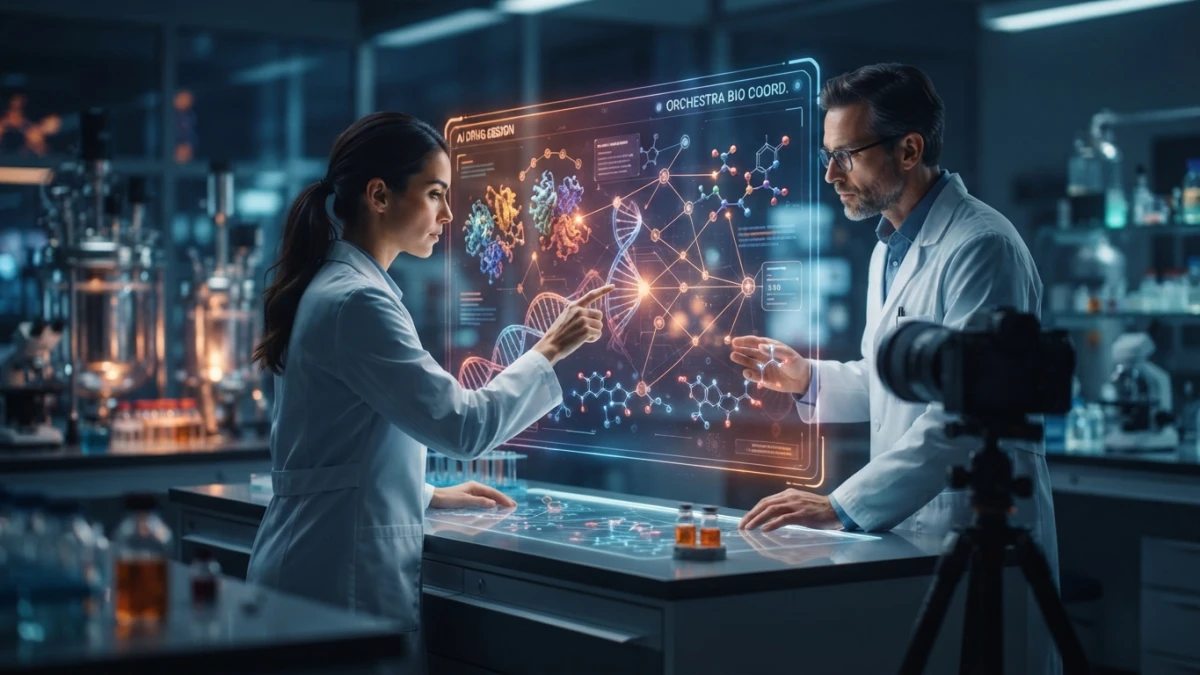
OpenAI announced on October 20 that it is buying Orchestra Bio, a platform that coordinates drug development with AI agents. It did not buy a lab: it bought the software that keeps other people's work in order.
What OpenAI Bought and What It Did Not
The announcement is short and carries no figures. OpenAI confirmed it is adding Orchestra Bio's team and technology to Rosalind, its life sciences research line. It did not disclose the price.
The October 20 Announcement
The company, founded in 2022, had raised close to 20 million dollars from Andreessen Horowitz and 8VC, according to the press that covered the round. Four years later, its team moves into an OpenAI division.
A Platform That Coordinates, Not One That Discovers
Orchestra does not look for molecules. It orders the process: which batch gets produced, which trial depends on which result, who is waiting on which signature. It is an operations layer, not a discovery one.
The Problem It Tries to Solve
Ten to Fifteen Years per Drug
The road from finding a molecule to the pharmacy shelf runs about 10 to 15 years. Most of that time does not go into experiments but into coordination between departments and partners whose systems do not talk to each other.
The Bottleneck Is Coordination
The example in the coverage is concrete: if a batch comes out defective, the system recalculates how that affects the clinical trial schedule and proposes alternatives. Today a person does that with spreadsheets and phone calls.
Rosalind: Where the Acquisition Lands
Orchestra is folded into Rosalind, OpenAI's life sciences line. It includes a model specialized in reasoning about biology and chemistry, plus an environment to plan experiments and analyze results.
What Rosalind Workbench Is
It is the workbench: where a researcher describes an experiment, reviews results and chains the next step. With Orchestra inside, that bench gains process state: it does not just answer, it also knows where the chain currently stands.
Why It Matters If You Build Software
Agents That Run Processes, Not Ones That Chat
The difference from a chatbot is state. An agent that is useful in industry has to remember which step it is on, who approved what and what happened when something failed. Orchestra sold exactly that: orchestration with a record.
What an Agent in a Regulated Setting Must Prove
In drugs, every decision gets audited. An agent that proposes rescheduling a trial has to show where the data came from and which rule it applied; otherwise it never clears review. It is the same requirement that shows up when AI enters banking or healthcare: traceability before speed.
What Is Still Unknown
There is no price, no integration timeline, and it is not clear whether Orchestra will keep selling its platform to other pharma companies or stay inside OpenAI. There is no public evidence of measurable results either: the promise of shaving years off is exactly that, a promise.
Conclusion
The acquisition says less about medicine than about software: the AI being sold in 2026 is not the one that answers, it is the one that holds a long process together without losing the thread. If you build products with agents, look there: the value sits in state, records and the ability to explain every step.